We see with two eyes. There’s a to and fro between two images, and a “putting together” in the mind. In other words, there’s thought in it. It’s a process of mind. Between two views, we make sense of things.
Wobble is built into sight, even in the odd case of vantage fixed rigidly in one orientation. Of course life is fluid. We’re not rigidly motionless. Ever. This is just a way of saying,
that binocular vision is only one aspect of wobble in visualization
Another aspect is that we move around what we’re looking at. A shift to the side a bit, and back sometimes. Sometimes a tilt. In fact we’re in continuous motion. That’s the thing, and we have memory. We’re comparing our vantage now, to our vantage a split second ago, and so on.
We move in a sort of arc, around whatever has our attention.
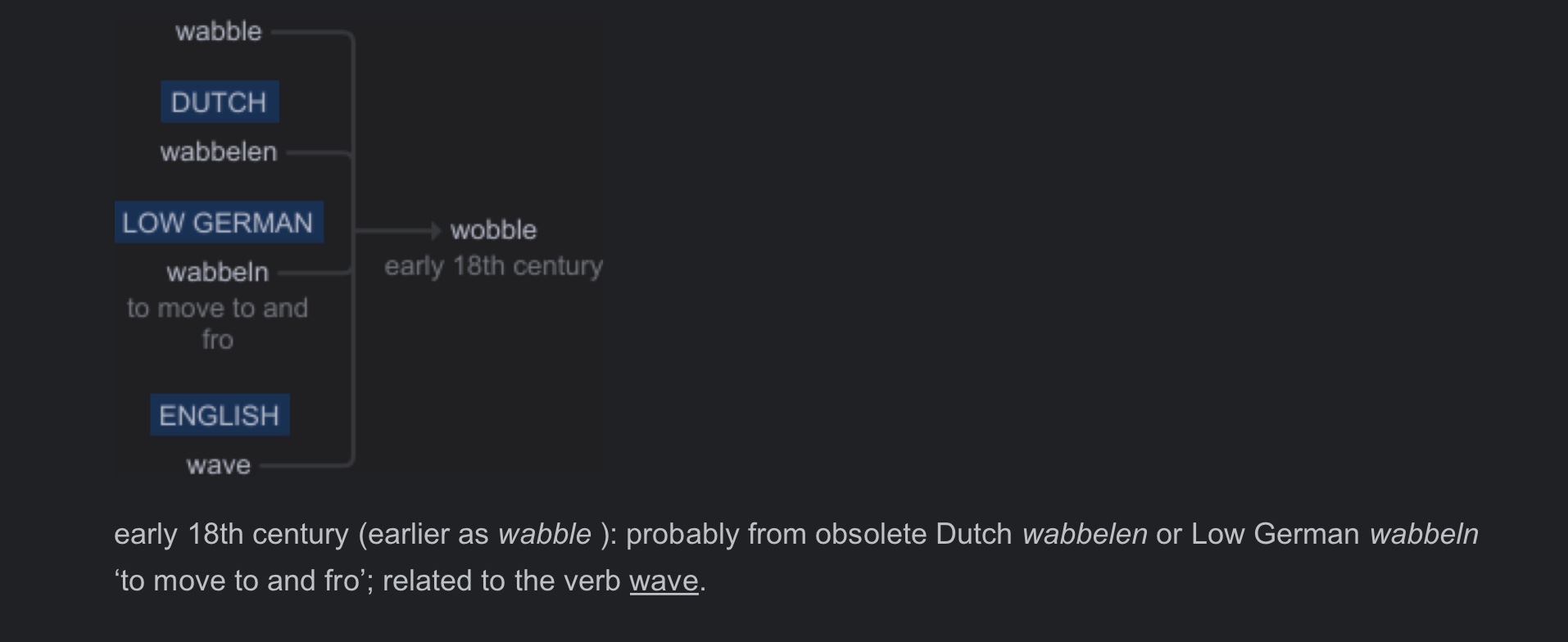
We wobble, moving to and fro. We’re oscillating
Everything else is too
What grabs our attention and holds in the memory is a related issue. If you recorded everything you looked at for a few hours in a typical day, the film would be unwatchable, like a recording from a head-mounted camera on an excited dog on the loose.
We decide what to pay attention to, somehow, just to navigate an ordinary day.
In technical fields, there is a more systematized framework of attentiveness. And wobble is there too. Hold that thought. I’ll come back to it.
It’s summer time
Multiple diversions follow. But with purpose.
First, best use of All Summer Long, selected by George Lucas as overplay for the out credits in American Grafitti:
The song is featured in the 1973 film American Graffiti as the closing credits roll, although the movie is set in the summer of 1962, two years before the song’s release. The song was included in the film to be a metaphor for the end of the time period that the movie celebrates. There was a comparatively fast changing of the cultural and music scene as the basic rock and roll and relative innocence of the 1950s and early 1960s in America gave way to the actual cultural end of the 1950s in America, signaled by the assassination of President John Kennedy—a popular, youthful, and charismatic president, impending American civil rights legislation, the arrival of the Beatles and their influence on America – on the popular music and style of the time, including that of Brian Wilson and the Beach Boys – as well as the beginning of American’s divisive involvement in the Vietnam War and its subsequent impact, leading to the greater political involvement of young Americans, which was to then be reflected in the culture of the time. Shortly before the ending credits of the film begin, there is silence as a montage shows how Vietnam and the future directly affects certain characters in the film. The tacit, sobering reality brought to the audience at this point is made even greater when it is broken by the bright, upbeat opening marimba of this energetic and positive Beach Boys song as the ending credits begin, with the song’s nostalgic lyrics of idyllic summers past creating a certain bittersweet tone that effectively washes over the audience.[6]
Continuing with the Brian Wilson and wobble themes:
Good Vibrations
Hi. This is Brian Wilson. When I was around, I don’t know, 10, 12 years old, my mom and I were walking to the market one day, and a dog started barking at us. And I went, mom, why is that dog barking at us? She goes, son, because some dogs pick up vibrations from people and not from other people, and when they pick up bad vibrations they bark, and so I said, well what about good vibrations? She said, well sometimes they pick up good vibrations.
And so one day I was with Mike Love at my house in Beverly Hills and I told him I had a song and it goes bom bi ba ba boom ba ba ba and I went, you know what Mike? I would like to call it Good Vibrations. And he goes, how’s this? I’m pickin up good vibrations, she’s giving me exc..and it fit to the music like boom ba ba ba it went together and that started our project Good Vibrations right there.
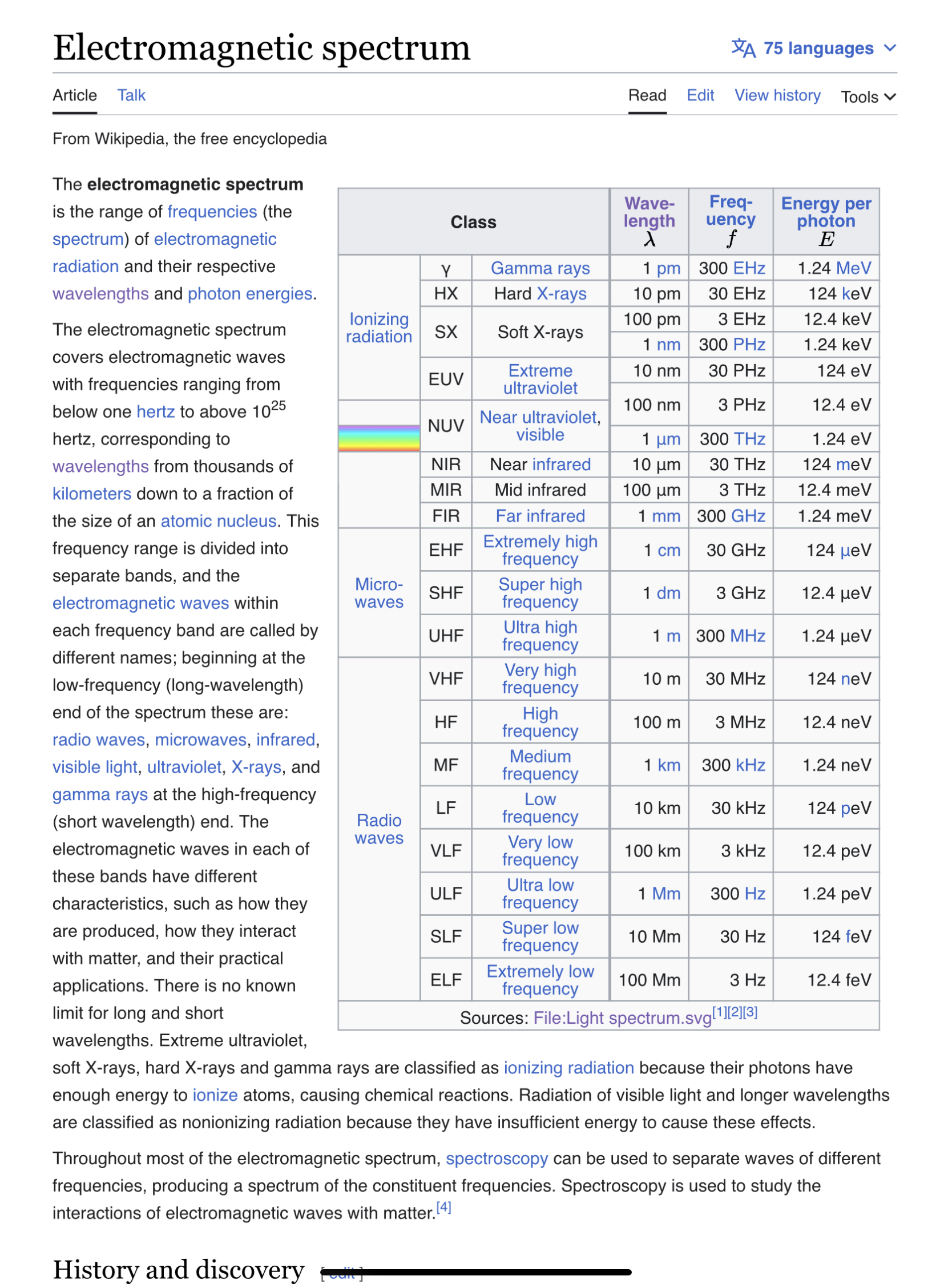
So can we say that it’s an understatement, that there’s something natural in wobble (vibration, to and fro, back and forth, frequency, wave, oscillation)
It’s essential to vision (sight, visualization) too.
in vision:
wobble is natural
wobble is necessary
without wobble, visual disambiguation is underpowered; interpretive accuracy declines
We look at something. What we see, could mean this, or it could mean that or something else. To make the determination, to disambiguate visual input, we move a bit.
Even with binocular vision, still we have to amplify the interplay between multiple image inputs. To do that we move in space, we wobble a bit.
Weebles
I’m old enough to remember these toys, from the ‘70s:
Little did I realize at the time but I sure can imagine now:
Weebles were the early commercialized output of a laboratory of neurocognitive scientists working out the visualization problem.
I mean, where else would these have come from? They probably funded continued research.
Anyway, before moving on from Weebles, here’s a guy really taking things to the limit:
Well, beyond the limit I guess. If you watch the video he has other endeavors besides giant Weebles. Looks like, maybe, he watched too many re-runs of The Gong Show. Either that or, dude finds inspiration and runs with it. Far!
But that’s the way it is. We don’t look at anything from just one fixed position.
Technical drawing
For those in architecture, engineering, construction and related fields imagining and actualizing the physical, drawing involves wobble, innately. And so does modeling, because modeling — and let’s generalize, forget about models, let’s talk about THE WORLD — the world is not interpretable, it’s unintelligible, without focus drawn, and attention sharpened, on particular views on things of relevant interest from which meaning is ascertained.
Wobble enters here in two ways. There is a wobbling to and fro between and among these various views of interest, between places where focus is drawn and attention sharpened. There’s wobbling among those.
But also, as mentioned above the Good Vibrations clips, wobble is also engaged at each of the views, precisely as it is in the real world. Everyone does this. All the time. We disambiguate vision with wobble.
We’re weebles with drawing. First of all, it’s a mix, yes, of models and drawings. It’s always been a mix. Even stronger, a fusion. They’re always together.
When you look at a drawing, you imagine it in fusion, where it is, in a mental model. As you look at some detail or section, some drawing, you imagine it where it is, in-situ, within the mental model, and you wobble around it. You do this as a mental exercise unassisted by digital media.
You don’t fix yourself in one viewing position only. You move yourself around, side to side, up and down, around the locus of the drawing, in the space of your mind, in imaginary space where the model sits along with the drawings at their true orientations within it. And you’re there too. What are you doing?
Wobbling.
Disambiguating.
Interpreting.
Learning. Understanding.
If you’re not doing this mental exercise, if you’re not wobbling / disambiguating, you’re not really looking at a drawing. Your disambiguation engine is underpowered (or not even started), your interpretive accuracy is very low.
You may appreciate certain visual qualities of the drawing but the meaning escapes you.
Let’s generalize:
Technical drawing is an act of attentive focus
Attentive focus is always in fusion within a wider expansive visual environment (especially of interest for any sentient beings endowed with vision)
There is always wobble, in the environment, around the locus of focus
For those who need meaningful understanding of what they see, focus, fusion, and wobble, are always in play.
A couple of facts:
Focus, fusion, and wobble, predate software
Software, and in particular software for digital modeling of spatial visual environments, does nothing, zero, to obviate, nor even alter in any way, that focus, fusion, and wobble are necessarily in play everywhere sentient beings endowed with vision are engaged with environments for interpretive purposes.
The facts are not well embodied, yet, in digital modeling software
But let’s cut the software industry some slack. Software’s still a child. Only (1948) 75 years old at this point. Still getting its bearings.
It should wobble more.
Drawing-model fusion, automated, started in 2012. If you take these things seriously you realize there is much more to do in this area, and it’s really important to do it. I talk about it here:
TGN OPEN CODE is proposed as an upgrade to the expression of our focus-narrowing attention-sharpening engagement with models. Fusion and wobble are built-in core features.
It seems to me that the upgrade to our form of engagement must include 8 primary features as the minimum set of actions packaged together that together coherently express this function while taking full advantage of what’s there for the taking within digital models:
8 FEATURES
(1) ADMINISTRATIVE JUNK:
where are the models stored?
do I need credentials to get to them?
what’s the coordinate system of the model?
who created THIS TGN rig?
Is this rig issued at some milestone or is it work in progress?
etc.
(2) SCOPE BOX: [FOCUS / FUSION]
Some narrowing scope boundary/volume in the model.
WHERE am I narrowing my focus? A rectangular volume or some more complex boundary, as with aircraft cutaways and whatnot.
In other words, however the bounding scope is defined, a bounding scope where attention is focused is made clear.
(3) A BUILT-IN CAMERA PATH: [WOBBLE]
for easily inspecting the bounding scope.
The camera path here takes some lessons from a hundred years of the history of film and makes it easy for the author of the TGN rig to provide an easily controllable viewing experience. This is similar to conventional drawing where the viewing experience is COMPLETELY controlled (one fixed vantage point only).
With TGN inside digital models, we mimic the mental activity we all experience when contemplating a drawing. We imagine a drawing in-situ within our mental model of the whole project, and we move ourselves around it back and forth, the way we move around a coffee cup, a chair, a person, a cat. Right? It’s never a permanently fixed single orientation. We wobble back and forth at least partially around it.
So this wobbling is built-in to each TGN rig. And there is, (next, 4):
(4) a UI SLIDER BAR: [WOBBLE]
that moves the camera back and forth along the TGN rig viewing arc/curve/path (3).
As you move along the viewing path looking at the scope volume, that volume has a primary face (the section or plan cut plane for example). When the camera is brought to the normal direction looking straight at the primary face of the scope volume, there the camera transitions itself to parallel projection.
The result of this is you are now looking at what unmistakably appears to be a conventional drawing. And, of course TGN can support linking graphics here (see 7, below) from external graphics apps, or, from external HAND DRAWINGS (photographed).
(5) FILTERING: [FUSION / WOBBLE]
When a viewer (or author) is engaged with a TGN rig, what elements of the model are shown within the scope volume can be controlled by the usual model-filtering methods.
These just tell the software which stuff to show and which to hide. Different criteria can be used.
Interesting thing about the TGN concept is that the show/hide filter can be activated continuously along the entire rig viewing path, OR, the filtering can change at different points along the path. You can use multiple different named MODEL FILTERS at different points along the viewing path.
(6) STYLES: [FUSION / WOBBLE]
You can do whatever you want with the style of model elements that you can see.
Use style strategically, to make things CLEAR, to show what you intend to show, to make yourself and others understand what’s going on.
As with filters, these graphics styles can change at different points along the viewing path. The rig author controls this. Viewers of the rig experience this the way the author set it up, as with filtering.
(7) EXTRA GRAPHICS: [FOCUS / FUSION]
You add any graphics you want, to what’s shown of the model according to all of the conditions set in 1 through 6.
So, you can add whatever non-model graphics that help you make clear what’s being shown and what matters.
You can add lines, shapes, curves, notes, dimensions, whatever.
Also interesting that these graphics can be added anywhere along the TGN rig viewing path.
TGN can support linking graphics from external graphics apps, or, from external HAND DRAWINGS (photographed).
(8) PORTABILITY: [FOCUS / FUSION / WOBBLE]
The entire package of features above is designed to be portable to other modeling apps. So, you can create these rigs in one modeling software, and share them to people using other modeling software.
The receiver gets what you authored with graphical fidelity intact at least to the minimum standard defined by the OPEN TGN standard.
There’s more detail in the post, including demo video, specification download links, and more commentary.
There are many more than 8 features that anyone can imagine developing related to this concept, related to AFRs, attention-focusing-rigs, in fusion and with wobble.
I described about 19 features in the specification I wrote (including elements in motion, besides the camera, for example, and rig externalization outside the model…). Download links to the spec are here.
The 8 features packaged together as TGN OPEN CODE make a good minimum viable core feature set that’s standardizable and well suited to being made open source and adoptable within many apps, from many vendors, all of whom can expand and enhance AFR according to their wobbly vision (!) while still utilizing a powerful open source core feature set that can be relied upon, by users making things, and themselves, clear, in models, and sharing their clarifying intelligible focus with other users in other modeling apps.
Focus, fusion, and wobble for everyone
TGN OPEN CODE is intended to bring focus, fusion, and wobble, as aspects of interpretive visual engagement with digital models, to all model-handling software apps, formats and platforms.
I suggest ways that can go from idea to actually happening, here:
Every developer of modeling software makes a choice among 3 options regarding what to do with — visual focus drawing attention where it should be drawn within models (for interpretive purposes), otherwise known as technical drawing.
Some choose without realizing it or putting much thought into it.
(1) — You can abandon it. You can say, as many do, that “the time of drawing is over; there is no need for visual focus drawing attention where it should be drawn within digital models.”
(2) — You can automate drawings from models and leave drawing’s form (of expression) unchanged, externalized from the models. You can do this partially as has been done for 20 (for some, 30) years, or increasingly more fully automatically.
(3) — You can do (2) but extend the automation with evolution in drawing’s form (of expression) that elevates the interpretive power of attention-drawing visual focus, thus further increasing model use and utility.
Many choose option 1. Many choose option 2. No one chooses option 3 yet.
I give my choice and the reasons for it. I believe within 20 years (hopefully much less) most companies will finally move beyond 1 and 2 to something like 3, something much (or exactly) like I specified with TGN OPEN CODE.
(1) is nonsense. Though it’s had its time as a kind of marketing slogan, there is, no matter where you look, no actual thought backing it up. It’s some kind of emotional appeal to I really don’t know what.
(2) underutilizes digital modeling, stifles interpretive power and model use and utility. And it requires mental exercise unassisted by digital modeling to instantiate attention-drawing visual focus (technical drawing) in-situ within mental models (for understanding).
(3) is the sensible choice.
Wrap up
To wrap up this post about wobble, and focus and fusion as essential aspects of visual engagement with the world, in tune with other non-visual engagements with the world and the world itself (good vibrations), enjoy another song and…
Do a little dance
And…
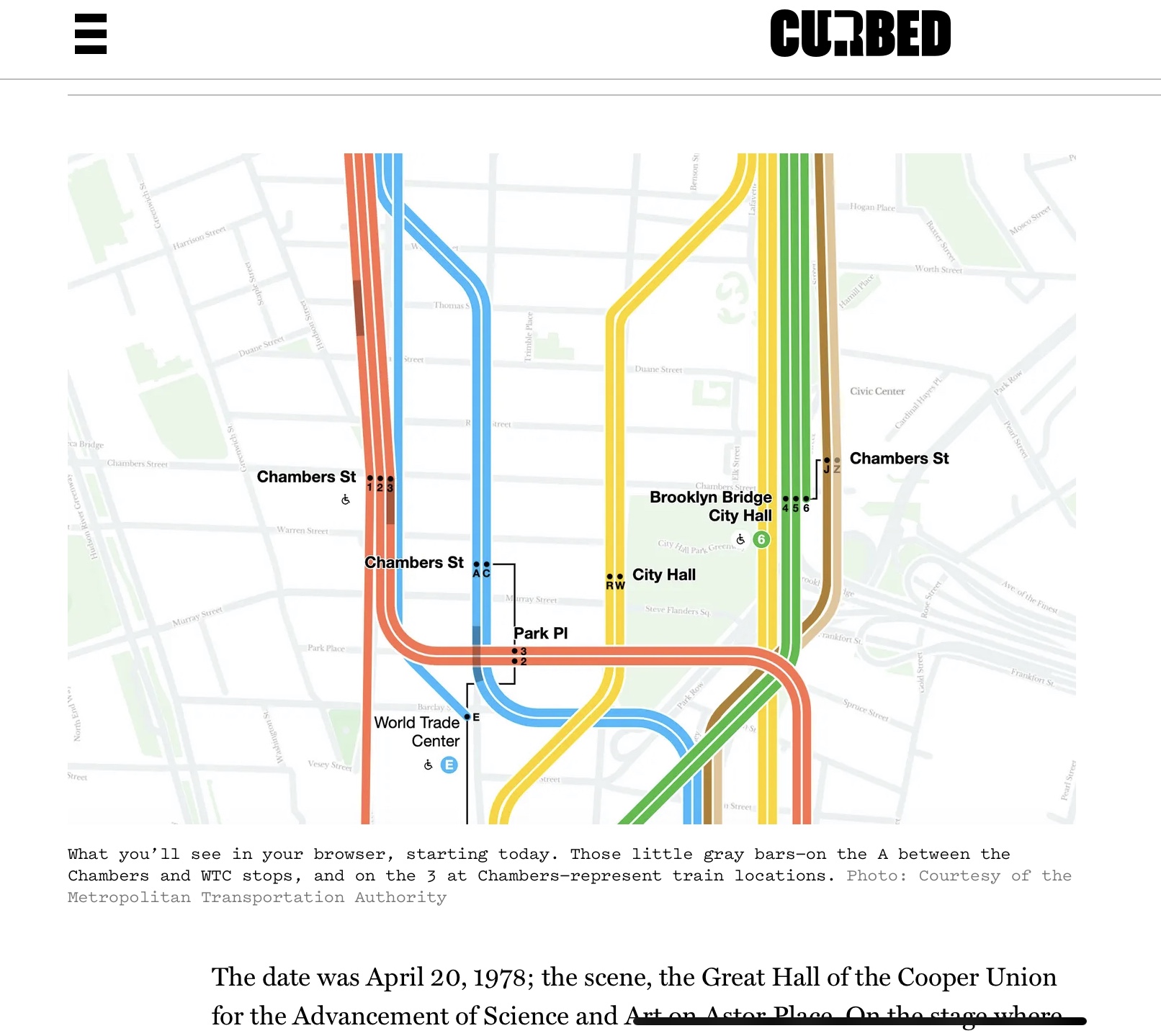
check out these articles about interesting realizations about visual engagement with extremely complex spatial realities (all of New York City).
The date was April 20, 1978; the scene, the Great Hall of the Cooper Union for the Advancement of Science and Art on Astor Place. On the stage where Abraham Lincoln once spoke sat two men, the Italian modernist Massimo Vignelli and the cartographer John Tauranac, constituting two sides of the Great Subway Map Debate. Six years earlier, Vignelli’s firm had reimagined the New York subway map into a groovy rainbowlike diagram, one that graphic designers loved and many riders found hard to navigate. Tauranac was the head of a committee that had engaged Michael Hertz Associates to re-re-draw it into the topographically grounded, graphically busy, and not particularly elegant map that — modest updates aside — is the one we all still use. Vignelli’s diagram was a joy to look at and was nearly useless as an aboveground navigation tool. Hertz and Tauranac’s map functioned pretty well as a map to getting around town but inspired comparatively little delight. Vignelli said the Hertz map made him “puke.” Tauranac countered with paeans to real-world use. (The moderator for the evening was Peter Blake, New York’s first architecture critic.) By the end of the Great Debate, the aesthetes sensed they were going to lose, and indeed they did. Hertz’s practical problem-solving work replaced Vignelli’s the following year, and the aesthetes have been rolling their eyes ever since. Jonathan Barnett, then a City College professor, summed up the evening by asking, “Why can’t we have both maps?”
We’re testing out four new maps, which show different ways of sharing information about buses, subways, and the neighborhoods they serve. Our new focus no longer relies on a one-map solution, but instead uses a collection of printed maps and diagrams that work together, each one providing details about different types of transit information.
Many transit maps for the New York City Subway have been designed since the subway’s inception in 1904. Because the subway was originally built by three separate companies, an official map for all subway lines was not created until 1940, when the three companies were consolidated under a single operator. Since then, the official map has undergone several complete revisions, with intervening periods of comparative stability.
The current iteration of the New York City Subway map dates from a design first published in 1979. The official map has evolved gradually under the control of the Marketing and Corporate Communications Department of the Metropolitan Transportation Authority (MTA). The 1979 design was created by the MTA Subway Map Committee, chaired by John Tauranac, which outsourced the graphic design of the map to Michael Hertz Associates.
The MTA released an interactive version of the map for digital devices in 2020, designed and built by Work & Co.[1] The Live Subway Map combines elements from the Massimo Vignelli’s diagram and the design by Hertz, and connects to a live database for real-time service updates.[2]
TGN is instead a redefinition of what drawing IS. An evolution in drawing’s form of expression. Done in a way that it’s expressed IN the models, and in a way that’s not siloed in any product but instead OPEN so it can be developed in all existing modeling softwares, of all kinds, and is portable between them.
This will transform visual engagement with all modeled environments, especially for those users engaging for technical purposes, where engagement has to produce beyond-superficial understanding of very complex models, during model creation AND during model use downstream.
I think the world already had enough products (generally, of course there are exceptions). What we need much more is evolution in the form of these things.
I look for developer organizations that want to build an open standard around this proposal, or something like it.
Hi! My name is Rob Snyder, I’m on a mission to elevate digital models in AEC (architecture, engineering, and construction) by developing equipment for visual close study (VCS) within them, so that they supply an adequate assist to the engine of thought we all have running as we develop models during design and as we interpret them so they can be put to use in support of necessary action, during construction for example.


 OPEN VCS, a lens for looking at models