I look like a pessimist because I’m an optimist. I don’t believe the worst will happen. I’ve seen it happen. I think things could be better.
Simon says:
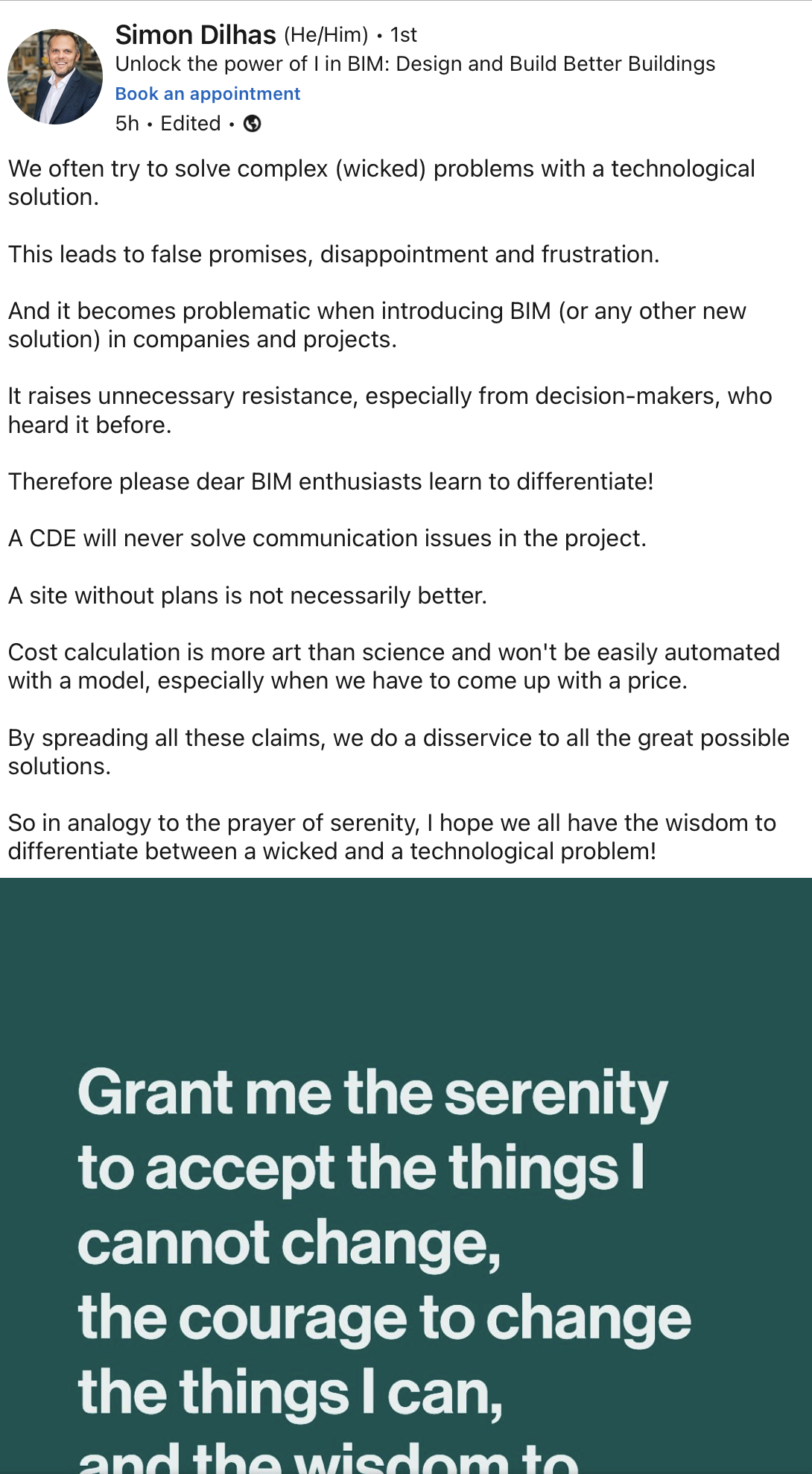
He makes an essential point. And getting it very wrong is so common. Digital models don’t solve wicked problems. They create some though, most often when they’re bandied by people claiming they do.
What models really are, are environments within which we think, and act. They’re not thoughts and acts. They’re places where WE think and act.
That’s enough, isn’t it? Why would anyone expect or need them to be more than that.
and it’s already amazing that they create an environment where we can think and act.
– Simon Dilhas
Exactly.
It’s already amazing enough. And/but it doesn’t mean the software is good enough. Actually I think the digital modeling software industry, now 30+ years old, is still in its infancy.
The evidence for that is the relative lack of tools/equipment within models that would lend useful support to our thought, thought processes, thought development, and action within the models. There has been all this time a kind of a void on that entire side of the software development equation.
Most likely it is this void, the blame for which belongs with software corporations for failing to imagine, think about, and develop this… The void left, where that should have happened, could very well explain why so many have filled the void with dreams of solving wicked problems instead (because it must be really great for something!).
Robert says:
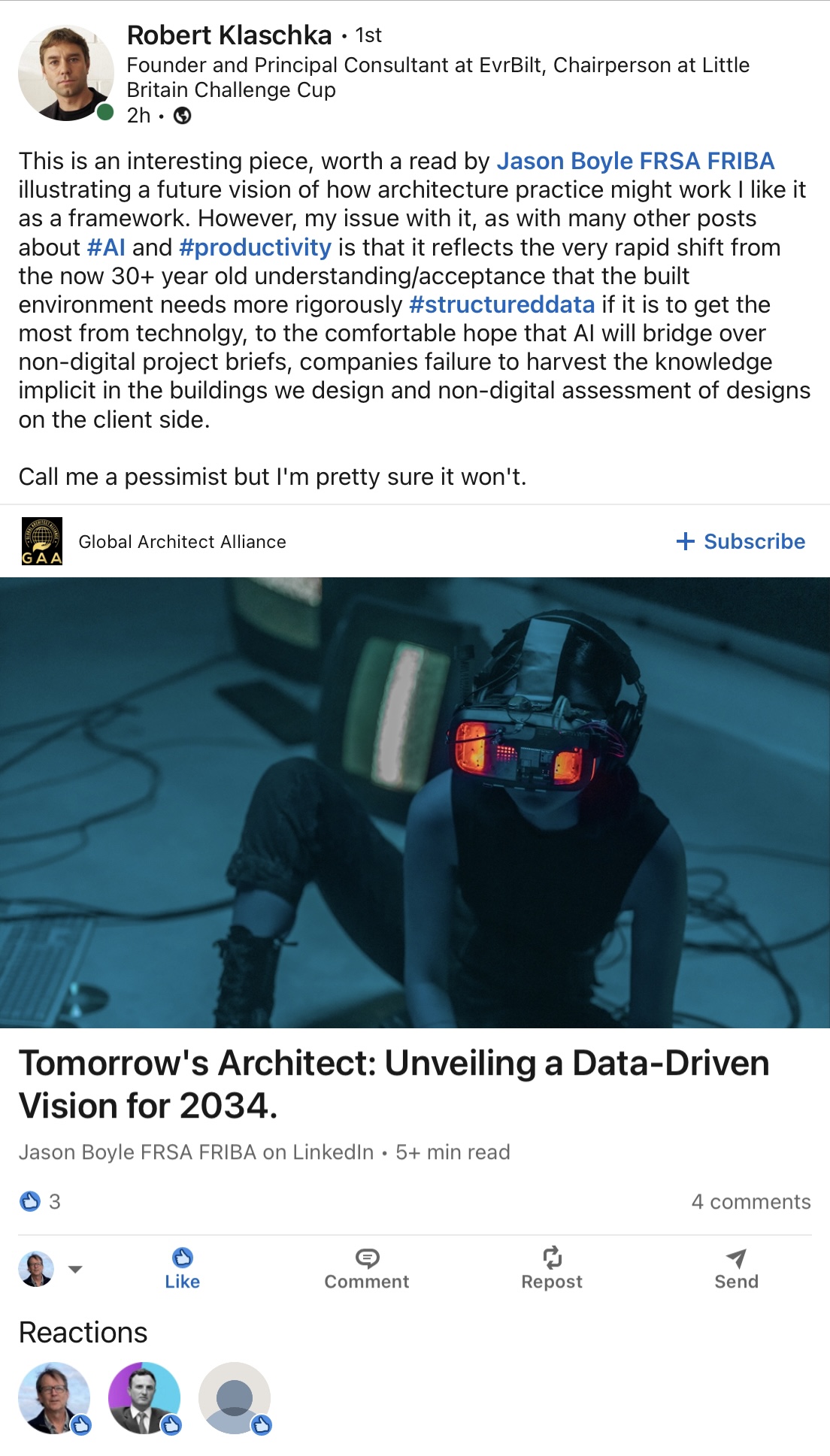
Yep, and the same went and goes for making “structured data” the answer to all problems and the lack of it the cause.
There have been other targets nominated including the foundational premise of contract (clear commitment), the general inadequacy of the human psyche, the failure to use only one software, slow to retire tech laggards, inability to get to the future to find inexpensive used time machines for getting there.
Sure many more will be added yet.
Or, the sooner the better, stop believing that digital models solve wicked problems or that they replace thought, action, or any of the equipment we’ve known supporting thought and action.
Models are an environment for thought and action, an upgrade, or rather, a supplement to the formative modeled environment, our MENTAL MODEL of the world and the things in it.
Within such models, give us, software developers please, the equipment we need supporting our thought, thought processes, thought development, and our action within the models.
Then model utility and utilization, both, will certainly increase while our need to invent fantasies about model utility will decrease. We’ll see and appreciate them for what they actually are.
Here is one proposal for equipment in digital models supporting thought, thought process, thought development, and action:


 OPEN VCS, a lens for looking at models