That chapter (and the others) is well written and fascinating. Read the whole thing. Here’s one paragraph:
The next pattern I often see at the management level is: “We think BIM is the future, but the others have to start first.” I hear this from owner reps about planers and from planers about owners. Construction companies tell me they are ready – but the engineers are not. And engineers say they would love to start, but the construction companies don’t know how to manage the model. This game is played even inside large owner organizations – with project management and a facility management department. The only achievement of this game of back and forth is that the status quo does not change, and money is wasted.
It prompts a few thoughts:
‘Digitalization’ means what? A transition from drafting software (already digital) to… what?
Is the industry very different where you are compared to the US where I’m from? Maybe I don’t quantify this right but in the US the move to modeling softrware in AEC went past the tipping point a long time ago, 20 years…
The US example in my experience may not actually prove comparitively better. More, or many more, moved to digital modeling and some degree of drawing automation, but the outcomes may not be favorable in comparison.
The stories you tell of resistance to making the same move, really resonate. Having done it the way it was done in the US, I respect people who see reasons clearly to continue what they’re doing without it.
The stories you tell reinforce in my mind the creeping sensation that there is something foundationally wrong with an entire generation of AEC software development. It may in fact not have been designed to do what’s really needed.
Would be really interesting to explore the differences, similarities and lessons learned.
In Switzerland I see a huge discrepancy between technology and it’s use.
80% of the architects have BIM modeling software.
50% use some BIM aspects of the tools
But only in 5% models are exchanged between different stakeholders.
Well, I started seeking jobs over 25 years ago in architecture firms that went all the way with modeling and related processes including exchanging models across the project disciplines. So my view on things may not be representative although I worked all over the US doing this. I’m just one person who saw just what I saw. I don’t know what I didn’t see. There must be reliable figures from some source though.
I also think the people who resisted it all, should also be listened to. If they’re not using these tools, then what exactly are they doing? Why, really, do they do what they do?
This must be understood.
Where I come from this was never done. Instead of real reflection we got, and get, something like this:
“Here are these softwares, and process. You need to use them. If you don’t, you’re a fool.”
The thinking really never did, and doesn’t, go any further than that.
How can really good software development come from that?
Well, it doesn’t. And ‘enshittification’ is a technical term that entered the lexicon in 2022:
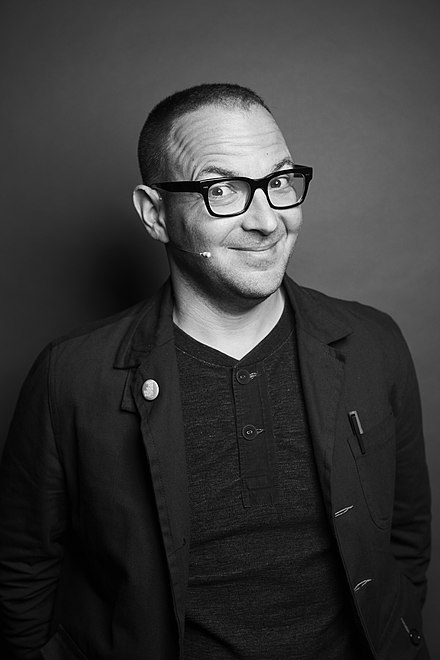
Cory Doctorow, who coined the term enshittification in 2022
The term enshittification was coined by the writer Cory Doctorow in November 2022; the American Dialect Society selected it as its 2023 Word of the Year. Doctorow has also used the term platform decay to describe the same concept.
Contents
History and definition
The term enshittification was coined by Doctorow in a November 2022 blog post[1] that was later republished in Locus magazine in January 2023.[2]He expanded on the concept in another blog post,[3]which was later republished as an article in the January 2023 edition of Wired, in which he said that enshittification is how platforms die:[4]
Here is how platforms die: first, they are good to their users; then they abuse their users to make things better for their business customers; finally, they abuse those business customers to claw back all the value for themselves. Then, they die. I call this enshittification, and it is a seemingly inevitable consequence arising from the combination of the ease of changing how a platform allocates value, combined with the nature of a “two sided market”, where a platform sits between buyers and sellers, hold each hostage to the other, raking off an ever-larger share of the value that passes between them.
According to Doctorow, new platforms offer useful products and services at a loss, as a way to gain new users. Once users are locked in, the platform then offers access to the userbase to suppliers at a loss, and once suppliers are locked-in, the platform shifts surpluses to shareholders.[5] Once the platform is fundamentally focused on the shareholders, and the users and vendors are locked in, the platform no longer has any incentive to maintain quality. Enshittified platforms which act as intermediaries can functionally act as both a monopoly on services and a monopsony on customers, as high switching costs prevent either from leaving even when alternatives technically exist.[4] Doctorow has described the process of enshittification as happening through “twiddling”; the continual adjustment of the parameters of the system in search of marginal improvements of profits, without regard to any other goal.[6] Enshittification can be seen as a form of rent-seeking.[4]
To solve the problem, Doctorow has called for two general principles to be followed:
The first is a respect of the end-to-end principle, a fundamental principle of the Internet in which the role of a network is to reliably deliver data from willing senders to willing receivers. When applied to platforms, this entails users being given what they asked for, not what the platform prefers to present. For example, users would see all content from users they subscribed to, allowing content creators to reach their audience without going through an opaque algorithm; and in search engines, exact matches for search queries would be shown before sponsored results, rather than afterwards.[7]
The second is the right of exit, where users of a platform can easily go elsewhere if they are dissatisfied with it. For social media, this requires interoperability, countering the network effects that “lock in” users and prevent market competition between platforms. For digital media platforms, it means enabling users to switch platforms without losing the content they purchased that is locked by digital rights management.[7]
The general condition, is a general condition. We see the pattern and the repetition of the pattern over and over.
“It’s deja vu all over again.”
https://yogiberramuseum.org/about-yogi/yogisms/ Yogi said arguably his most popular Yogi-ism after Mickey Mantle and Roger Maris hit back-to-back home runs during the 1961 season. Both players were vying to beat Babe Ruth’s record of 60 home runs hit in a single season; Maris would go on to beat it when he hit his 61st home run in the final game of the season.
I rode for years a long time ago on the high horse of AEC tech, climbing the bandwagon until I jumped off covered in dust and watched it ride off either into some frontier that I’ll miss, or:
What models really are, are environments within which we think, and act. They’re not thoughts and acts. They’re places where WE think and act.
That’s enough, isn’t it? Why would anyone expect or need them to be more than that.
and it’s already amazing that they create an environment where we can think and act.– Simon Dilhas
Exactly.
It’s already amazing enough. And/but it doesn’t mean the software is good enough. Actually I think the digital modeling software industry, now 30+ years old, is still in its infancy.
The evidence for that is the relative lack of tools/equipment within models that would lend useful support to our thought, thought processes, thought development, and action within the models. There has been all this time a kind of a void on that entire side of the software development equation.
Most likely it is this void, the blame for which belongs with software corporations for failing to imagine, think about, and develop this… The void left, where that should have happened, could very well explain why so many have filled the void with dreams of solving wicked problems instead (because it must be really great for something!).
Yeah, and the same went and goes for making “structured data” the answer to all problems and the lack of it the cause.
There have been other targets nominated including the foundational premise of contract (clear commitment), the general inadequacy of the human psyche, the failure to use only one software, slow to retire tech laggards, inability to get to the future where we can find inexpensive used time machines for getting there.
Sure many more will be added yet.
Or, the sooner the better, stop believing that digital models solve wicked problems or that they replace thought, action, or any of the equipment we’ve known supporting thought and action.
Models are an environment for thought and action, an upgrade, or rather, a supplement to the formative modeled environment, our MENTAL MODEL of the world and the things in it.
Within such models, give us, software developers please, the equipment we need supporting our thought, thought processes, thought development, and our action within the models.
Then model utility and utilization, both, will certainly increase while our need to invent fantasies about model utility will decrease. We’ll see and appreciate them for what they actually are.
Here is one proposal for equipment in digital models supporting thought, thought process, thought development, and action:
Hi! My name is Rob Snyder, I’m on a mission to elevate digital models in AEC (architecture, engineering, and construction) by developing equipment for visual close study (VCS) within them, so that they supply an adequate assist to the engine of thought we all have running as we develop models during design and as we interpret them so they can be put to use in support of necessary action, during construction for example.


 OPEN VCS, a lens for looking at models