Reductionist thought stunts higher thought when appropriate application of reduction expands too generally and well beyond the bounds within which reduction is useful. If it expands into other domains where other kinds of thought are useful and productive, then the latter is stunted by growth of the former.
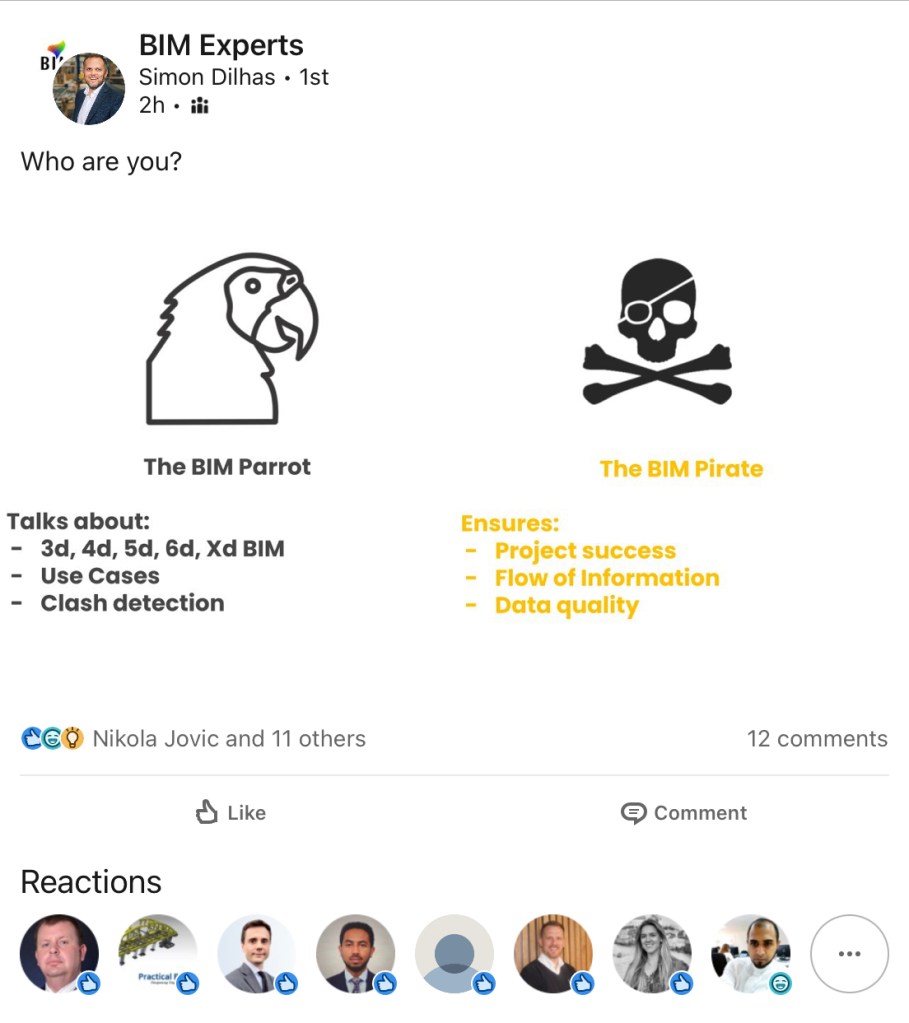
Very good by Simon, below. I’m just curious though about “use cases”. That’s software development jargon, as far as I know. I never heard it years ago when I worked at architecture firms. But you hear it every day if you work at a software company.
Has use of that term trickled down into, well, where has it trickled down to? Who says anything about “use cases” other than corporate software development company management?
It’s no secret, you can read in the WSJ or NYT about layers and layers of management jobs in corporations stuffed with jobs serving no useful purpose, jobs that contribute nothing of value. Or read David Graeber’s book: https://en.wikipedia.org/wiki/Bullshit_Jobs
Of course, sure, this reality propagates itself, expands and trickles into everything.
If A, E, AE, C, AEC firms, if they’re now also getting stuffed with these jobs, yeah, what a shame. No good can come of it. That’s an understatement.
And there may be no remedy for it other than watching it continue until total collapse.
You might prepare for it and spend your free time learning to draw everything by hand again.
And exercise the mind, going through the cognitive process that that engenders in a loop from a set of expressions of narrowed attentive focus (drawings) to the wider expansive whole of the environment (the mental model in formation), and back, and back again in a continuous loop.
I think at this point, 30 years down the road since the start of the dominance of everything by software, and the pervasive decay of everything induced by this (it correlates, and cause can be located), it would be worthwhile, though certainly unrewarded, to compare outcomes and efficiency:
Compare a great team of today, using state of the art tools and practice, and compare the total efficiency, all-in cost, and time, and the quality of the outcome, compare that to a highly skilled team of highly experienced architects and engineers and builders using only tools and processes available before digital computing.
Assumptions should be thrown out the window right away. Going full circle all the way back is the likely winner. The mind was more engaged then. Certainly.
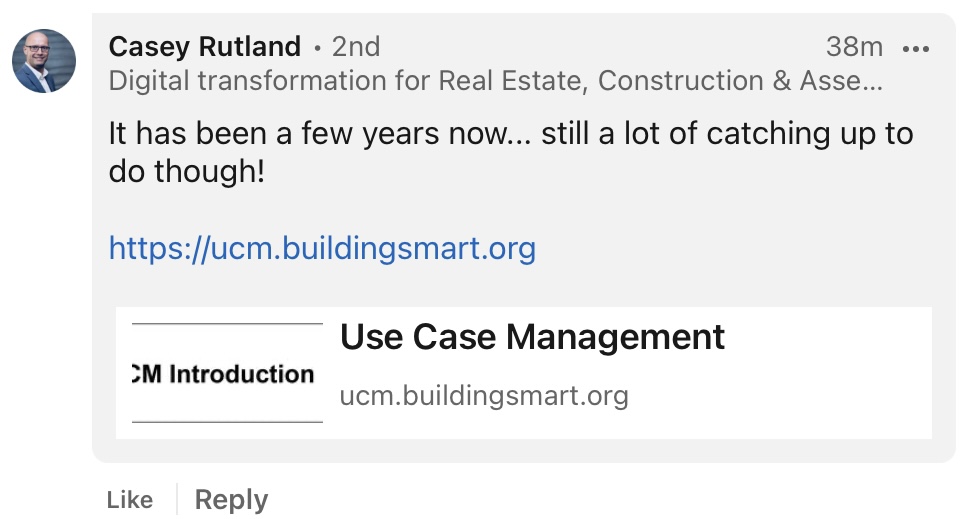
OK. Sure, they are moving their use of language out into the world and down into their customer base. Of course buildingSmart’s customer base is first, software companies (who already use such language), and after those, end users at AEC firms.
buildingSMART, of course that’s a software development organization. It produces standards and format specifications for use, first, by software development companies. End users encounter it when those standards and formats are implemented by developers into software applications. They charge software companies money for membership and standards implementation certification.

Simon, Wow. I see. People should keep in mind the origin of such thinking and terminology. In the CAD development space, management would talk about “use case” in situations like this:
— users complain it takes too long to ‘trim’ lines.
— developer thinks, well I can make it easier and faster to trim many lines, like this…
— management says, err, but what’s the use case?
The use case? Well, it’s simple man;
These lines, extend across those lines, and we need to cut them off
I mean, that kind of thing (“use case”) is used to put a brake on spending money on development, first, and maybe guide it in some way to keep it on the rails if approved.
But I use that example on purpose.
It’s real.
But importantly it is, as you can see, very narrow in scope.
To try to apply such a concept (“use case”) to a much broader environment scope of interwoven tasks is fraught with fragility and blindness.
Such complexity takes a different kind of thinking.
The kind of thinking that’s needed in fact gets stunted by reductionist methods and their rhetorical slogans.
I think it’s hopeless.
This machine runs on its own and flattens anyone who gets in its way.
And it will continue the decay of skills and outcomes until the bottom is reached.


 TANGERINE FOCUS