We thought wrong. The error started decades ago with everyone confusing the basic categories. We saw drawings and then we saw digital models and we thought:
ah… that’s the progression, drawings are the past and models are the future.
The fact is there are two progressions, not one.
- The first is from mental models to digital models.
- The second is from conventional drawings to OPEN VCS (or something like it)
Drawings are a vehicle for Close Study. Or call it Visual Close Study. Or V-C-S. It’s about focus.
Close Study whatever its name, matters in AEC:
What AEC professionals do
Here I attempt to describe the core work of AEC professions, the primary work that architects and engineers do, the core work of AEC, architecture, engineering, and construction, A and E on the design side, C on the build side. Keep in mind that while C is building, they’re formulating mental models through visual close study first, prompted by the media delivered by A and E.
Very soon after project start, a digital model quickly exceeds already our cognitive grasp. This is demonstrated by our declining ability to answer even basic questions about it, like:
- is it done yet?
- is it good enough yet?
- is the model forming a coherent functionally successful whole?
- is there good fit among the physical items modeled?
- are any physical items that matter, missing? Where? Where not?
- is the model good enough in some regions and not others?
- where are the regions that are good enough?
- does anything signify to anyone the useful distinction between regions that are good enough and all other regions that may not be?
Focus is needed.
You have to be able to focus to get to clarity
To get to clarity through focus means putting a lot of things in second place. Yes, you know the secondary things are there, but you demote them vis à vis things that have to be brought to front of mind.
If you’re designing a building, a ship, a machine, or an aircraft, designing any complex thing for construction or manufacturing, what’s really happening is that:
- you’re formulating a mental model of the thing,
- that mental model is fuzzy, and full of gaps and inaccuracies, and
- you’re shepherding the model from its inadequate state to something functionally adequate.
This is true whether you’re developing a digital model accompanying the mental model or not. You can easily prove this to yourself. No digital model has ever meant anything to anyone, beyond superficial barely grazing understanding, without adequate mental model formation.
Adequate mental model formation is done through focus. And focus brings clarity to mental (and digital) models in formation:
Focus
1: to concentrate attention or effort
focus on the most pressing needs
2: to adjust one’s eye or a camera to a particular range
Newborn babies cannot focus for several months.
A systematic framework for this is necessary.
Technical drawing is that framework.
Primary functions of technical drawing:
- At informative locations within models mental, physical, and digital we develop sustained expression of our act of clarifying attentive focus. That is, at, let’s call them, locations of visual close study or V-C-S.
- At V-C-S locations in models weconduct physical evaluation of the model. The evaluation is mainly a check against omission of physical items in the model, and also a check for good fit among the physical items present (see what Vitruvius said aboutgood fit at the link).
It takes thoughtful sustained effort to develop these checks during model development and also during construction. Models start from nothing and grow into what they become. The checks are done all along the way in a process of using the engine of thought (or, thinking). See (4). - Physical and good fit evaluations at V-C-S locations conclude with affirmation of model QA/QC (quality assurance/control). Who affirms what, where, is made clear. This supports accountability.
- Successful expression of visual close study, V-C-S, sets out the context/focus array that we can call the 2-pole engine of thought itself. The engine is an observable cognitive dynamic formed as an interplay between the wide expanse of a modeled environment (the FIELD), and the narrowing act of our attentive FOCUS within it, at V-C-S. locations.
- In this interplay between environment or world and attentive focus, field and clarifying close study, between the model and the medium of visual close study (technical drawing), thought happens and understanding grows.
- The two poles, (WIDE/narrow) (FIELD/focus) (MODEL/vcs), are as distinct from each other as the COSMOS and a /lens for looking at it, as the UNIVERSE and a /telescope, They’re not in any way the same kinds of things and of course are mutually irreplaceable.
- Finally, visual close study supplies the courtesy of drawing attention to things not to be missed in the model.
clarity
b: the state of having a full, detailed, and orderly mental grasp of something
She remembered that day with surprising clarity.
Employees are looking for some clarity [=understanding] on the company’s new policies.
The first step is to ensure you have clarity of purpose. I’ve been shocked how often people who started an enterprise seem to forget their original purpose.—Jacob Harold
… juggling so many creative balls at once that it’s amazing he has such clarity of thought.—Hannah Stephenson
“… You suddenly got a moment of clarity and you go, ‘What the hell am I doing?’ …”—Ozzy Osbourne
c: the quality of being easily seen or heard
Those dual 12-inch subwoofers … may produce volume, but the key to a good sound system is clarity.—Jim Kerr
Displayed as a negative image for greater clarity, the stars look like grains of pepper sprinkled on a white tablecloth.—Andrew Chaikin
There is more discussion about the facts listed above about models, and the 5 (most general) functions of technical drawing, and about, in general, how we think about anything complex, and how we communicate about that, in my blog post here: https://tangerinefocus.com/2024/10/13/open-vcs-equipment-for-visual-close-study-in-digital-models/
EVOLUTION OF VCS EQUIPMENT
Just as technical drawing is for visual close study, of mental models, OPEN VCS is for close study of digital models.
So I repeat from the top:
We thought wrong. The error started decades ago with everyone confusing the basic categories. We saw drawings and then we saw digital models and we thought:
ah… that’s the progression, drawings are the past and models are the future.
The fact is there are two progressions, not one.
- The first is from mental models to digital models.
- The second is from conventional drawings to OPEN VCS (or something like it)
OPEN VCS developer specification
This is the third version of the OPEN VCS Specification. Please read it at this link:
OPEN VCS equipment for Visual Close Study in all digital models 26NOV2024x
The spec includes detailed description of the 8 core features of OPEN VCS, plus a dozen or so related features, among many other possible features beyond the proposed, shared, standardizable OPEN VCS feature set.
This is a living document. If you would like to comment or be invited to help edit the OPEN VCS specification, send me a message on LinkedIn: linkedin.com/in/robsnyder3333/
Would you like to help us establish, an OPEN VCS Collaborative?
We’ve begun building this. We have a small volunteer open source developer team with potential to grow, a nascent codebase, a very professional developer organization joining us on OPEN VCS development just now, another one thinking about it, and we have a new specification, rewritten, much improved and also open: OPEN VCS equipment for Visual Close Study in all digital models 26NOV2024x
There is an open source piece to OPEN VCS, and we want to see OPEN VCS implementations in all modeling applications in AEC. All, users and app developers, will benefit from the open core but everyone can extend and add VCS-supporting features independently, beyond the core and beyond open source if they wish.
We see this working in the following ways:
- We establish an OPEN VCS Collaborative (or Consortium or Foundation or…some acceptable entity) to facilitate OPEN VCS open source core features development, as a group that maintains an open door welcome to developer organizations of all kinds and sizes.
- We help development organizations that want OPEN VCS implemented within modeling applications of their preference, whether they’re users of those applications or developers of those applications.
- We also will help those who want help developing extensions and additions of VCS features beyond the open source core according to unique needs and vision.
- Everyone benefits from the open source core while remaining free to extend and add.
OPEN VCS matters.
Sure there are piecemeal siloed one-off attempts that pop up here and there within an office, scattered fragments of partial attempts at addressing this, but no developer organization of significant strength yet paying attention to this fundamental oversight and the need for a generalized solution acceptable to industry.
I figured out what that is. People typically laugh and dismiss anyone who says that. That’s fine. You can laugh at me. But I challenge anyone to dismiss OPEN VCS after reading the spec: OPEN VCS equipment for Visual Close Study in all digital models 26NOV2024x
If you want to help this happen, either as a user or developer, message me: linkedin.com/in/robsnyder3333/

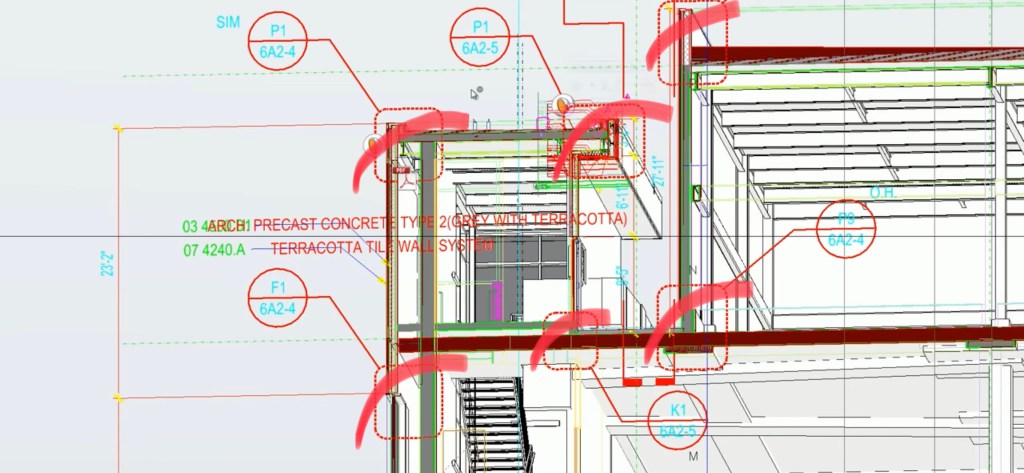
 OPEN VCS, a lens for looking at models