
If we identify what people are actually doing when they’re developing and interpreting technical drawings, we’d be looking at the problems addressed by the core work of AEC professionals.
If we’re hungry and need to eat, we can make a spear, throw it into a wild boar, clean, cook, and eat it. There are instruments involved but the sequence of acts and assemblage of things needed, don’t slip our grasp. After some training passed on culturally, we can hold it all in mind without outstripping our cognitive limits.
AEC projects are not like that. AEC projects quickly surpass our cognitive limits. We’re in compulsory need of instruments of cognitive aid. The need is not confined to any single phase of AEC work. It begins on day one of project design and continues all the way through the last day of construction.
What does such an instrument do precisely, in AEC? What is the nature of cognitive aid, in AEC?
The rest of this post discusses that, by listing what AEC’s instrument — for looking at models mental and digital, with specific intent, and showing that you did — does.
As follows:
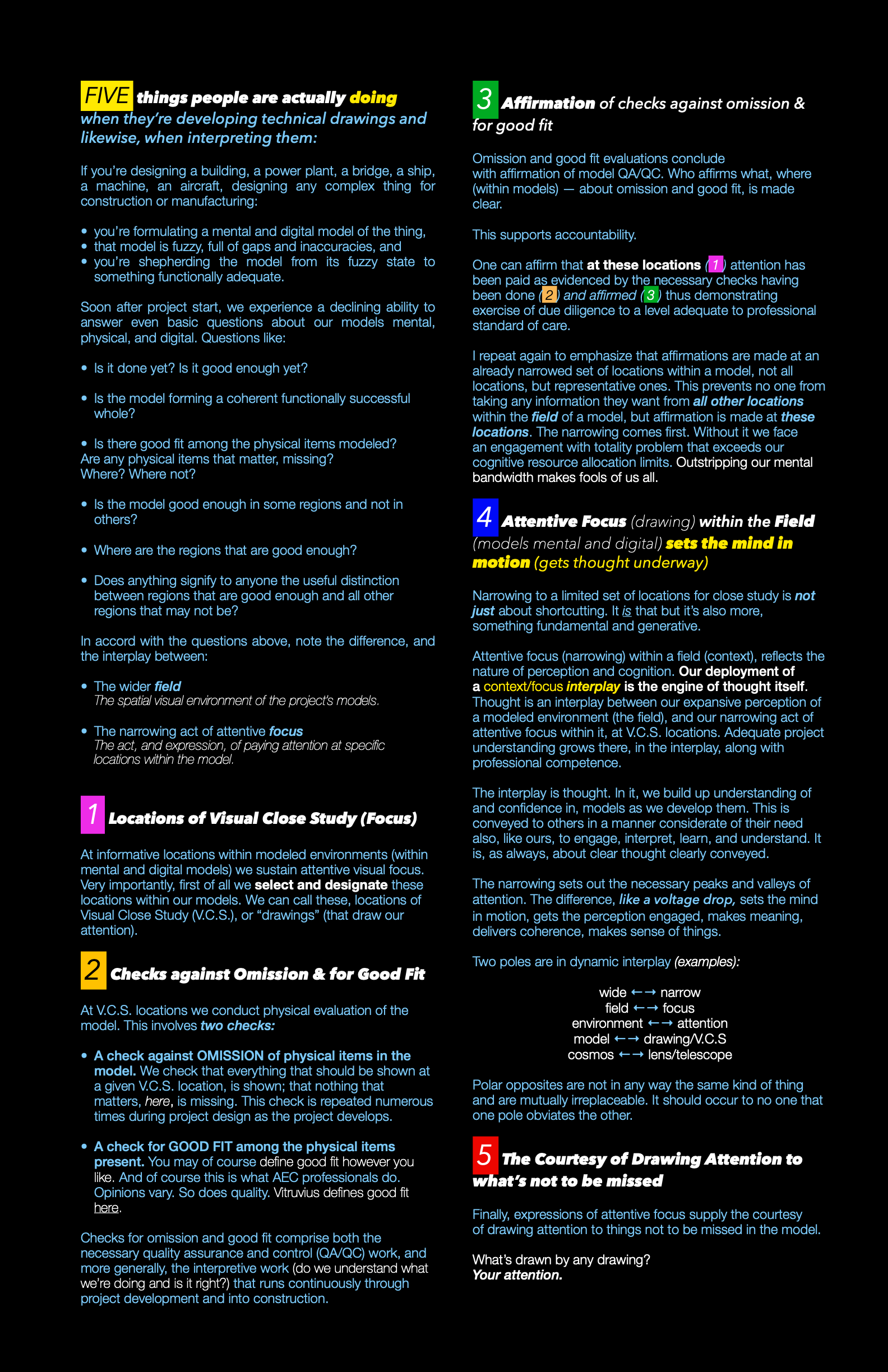
The vehicle for these functions, for looking with intent and showing that you did, in its currently known form of expression is the set of technical drawings.
They’re entirely about models.
The reason people make and use drawings, has everything to do with models..
You may have thought that you know why people make technical drawings (CDs in AEC), or why you yourself make them.
But are you clear about that?
Getting paid to do them is not the answer. Fulfilling a contract is not the answer.
Why are people contracted and paid to make drawings?
Here’s the answer (the image above).
If you’re passionate about telescopes does that mean you’re against the night sky?
If you’re passionate about recorded sound does that mean you’re against motion picture?
If you’re passionate about drawings does that mean you’re against models?
The discourse about models and drawings has been framed in the most counterproductive way possible for 30 years.



 OPEN VCS, a lens for looking at models