If I’m passionate about telescopes does that mean I’m against the night sky?

Here’s how people closely look at, how they study AEC models to both develop and interpret them.
It’s what they think about, what they need to think about, and how they think about it.
It’s the actual function of drawing.
It’s all about models:
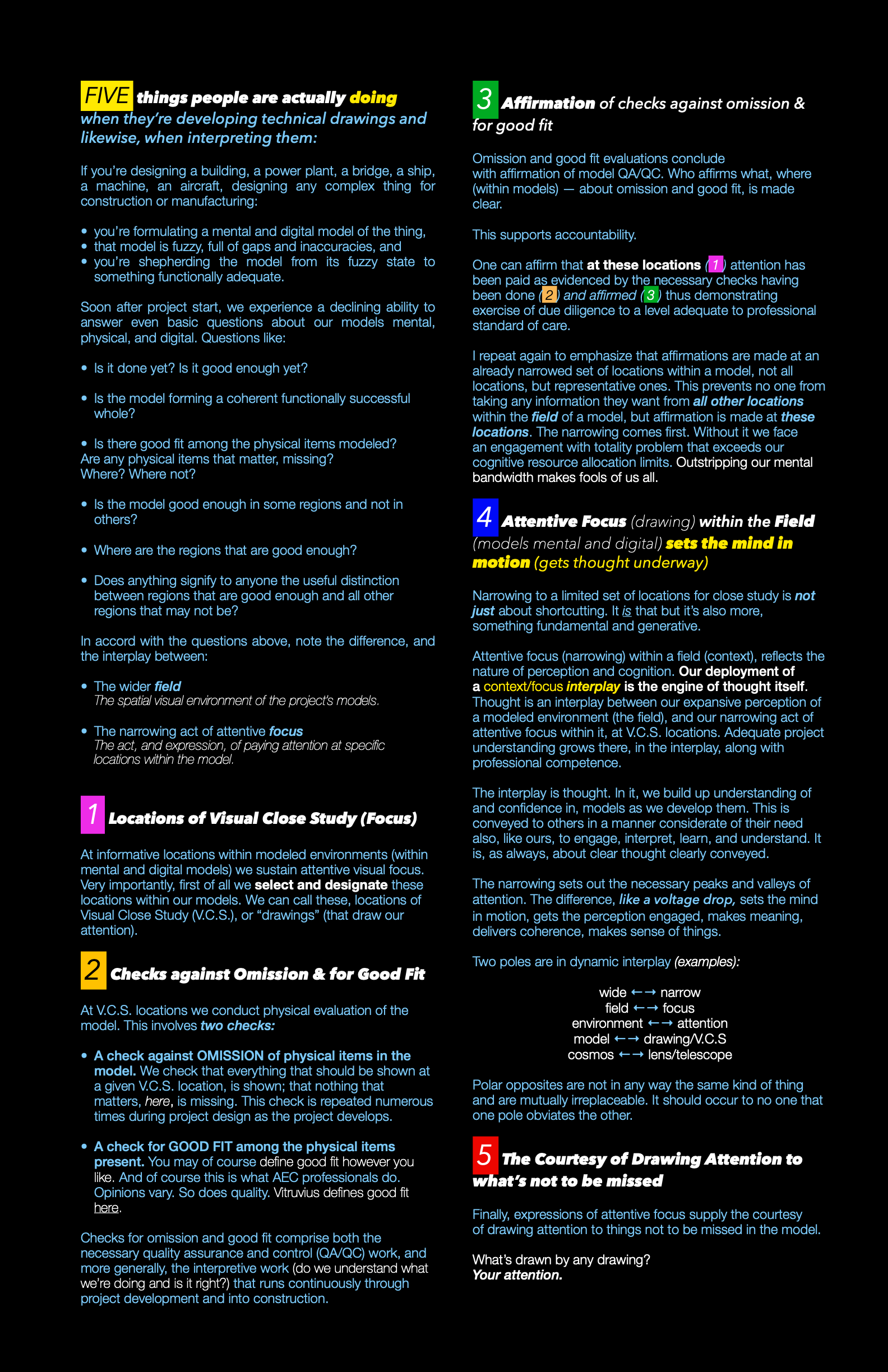
Tech discourse about models and drawings has been framed in the most counterproductive way possible for 30 years, paraphrased typically like this:
At some point in time we need to move past blueprint language and its waste of time, resources, and confusion and provide construction documentation in the way designers think and tradespeople build.
Frank Gehry got us started because his designs could not be translated with blueprint language. We should use that for all types of designs in the future. It will be harder than moving from pencil to BIM, but it is our future.
The problem is that technical drawing (“blueprint language”) is the way people think.
Things can evolve however. The form of expression – of the cognitive functions deployed for generative and interpretive purposes against complex visual spatial environments – can evolve.
The last 30 years have shown that the greatest impediment to this is the barrier, whatever it is, preventing coherent thought, or even the intention to think, about what the function of drawing is. Again see the list above.
There is precedent evolution though, in its niche, and a next evolution is spec’d out:
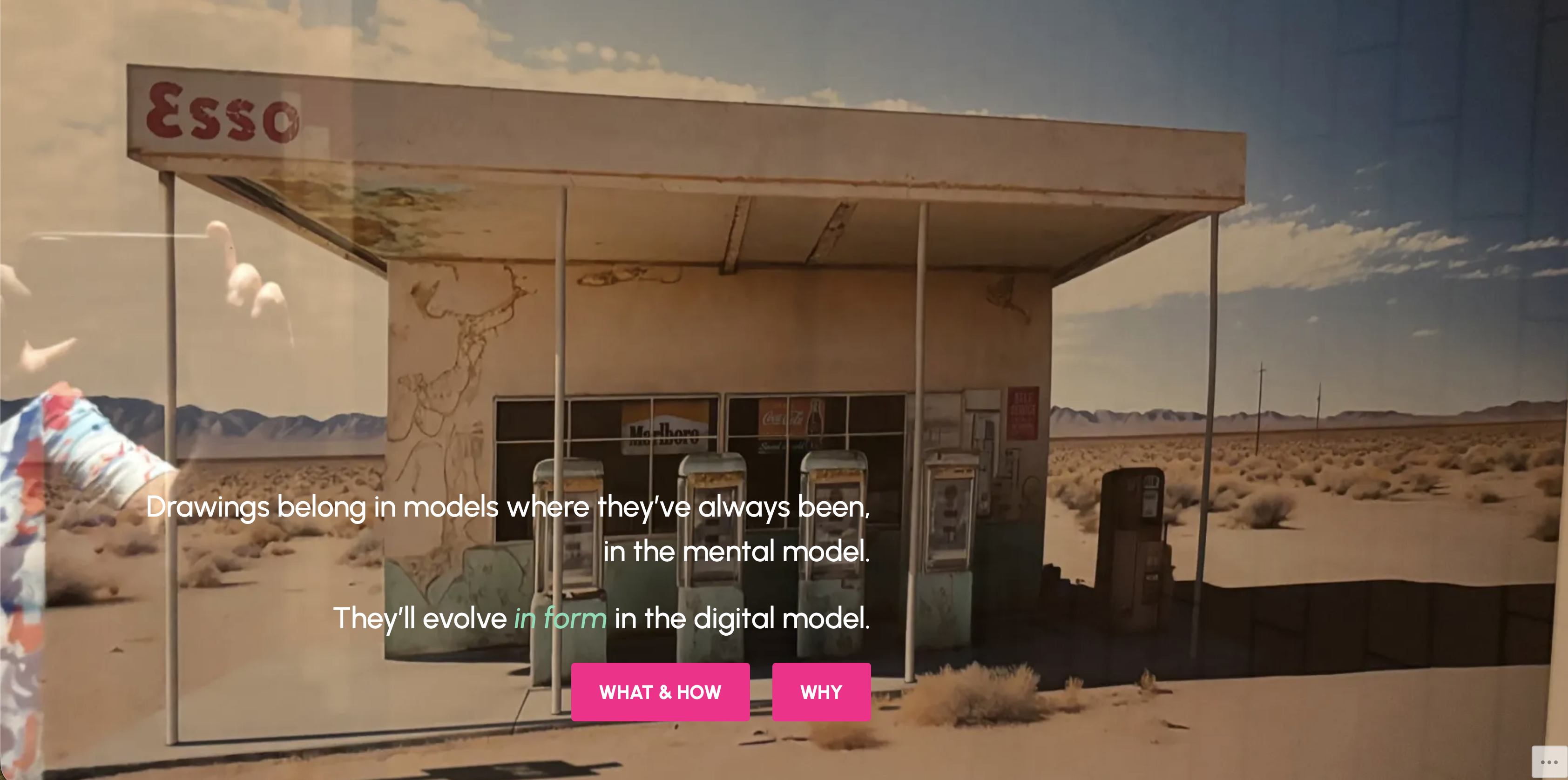
It’s all about fusion and evolution in form that follows function.
Don’t forget this gem of a miss:
In September 1926, Jack L. Warner, head of Warner Bros., was quoted to the effect that talking pictures would never be viable: “They fail to take into account the international language of the silent pictures, and the unconscious share of each onlooker in creating the play, the action, the plot, and the imagined dialogue for himself.”[146]
By the way, it’s the way the mind works in general, in ordinary daily life:
But back to architecture; it might interest some to see the full set of construction drawings the way I did them back then (1998 – 2008). All the drawing graphics that represent physical reality are automated from the digital model, along with all the graphic stylization, and most of the labels and symbols likewise automated from the model. Notations were added manually. You can see the model here (with the drawing fusion tech we added later at Bentley in 2012, retrofit back into the old project model from 2008):
Here are the automated drawings, from 2008. Click the links to view full size PDFs of each sheet:
Exterior Shell work, drawings:
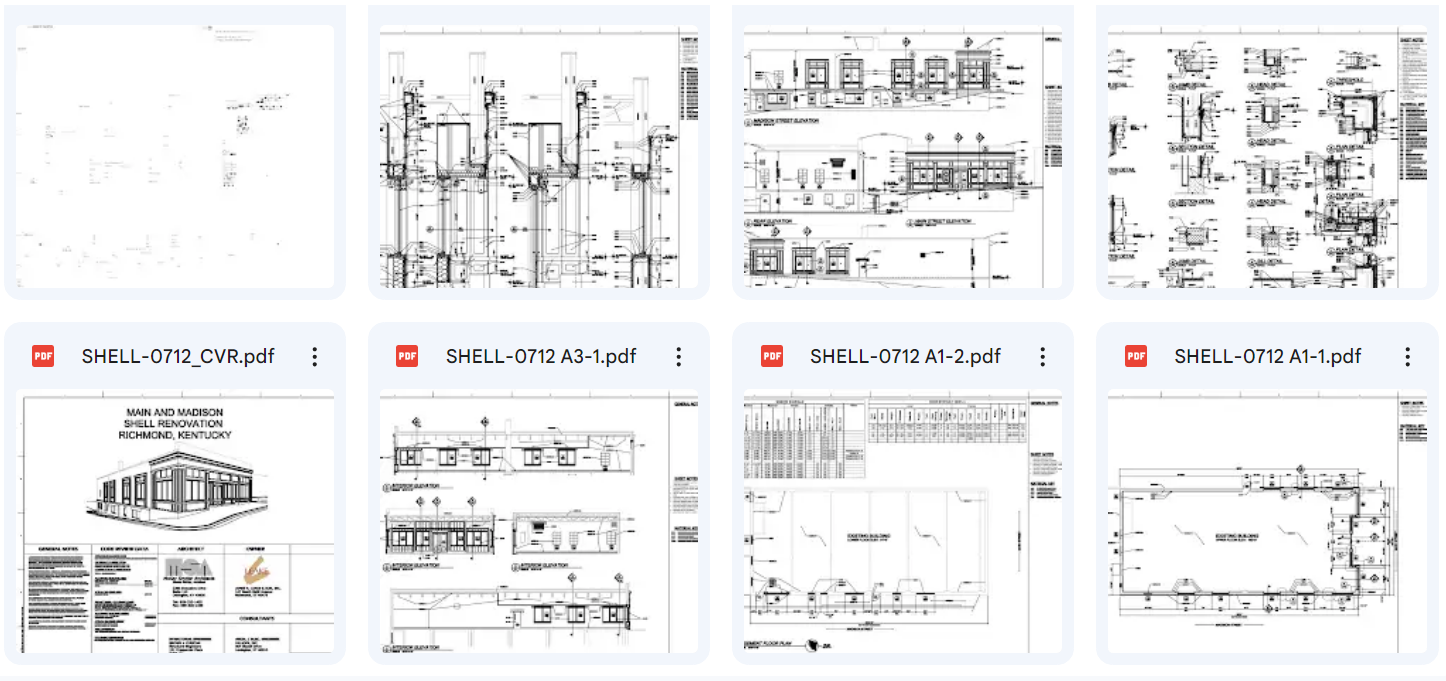
https://drive.google.com/drive/folders/1BZckPOyYCyGFgoVIDUEO69_zEjBqVxdI?usp=sharing McKay Snyder Architects, Jim McKay, Architect
Click the link above to view full size PDFs of each sheet.
Interior Renovation work, drawings:
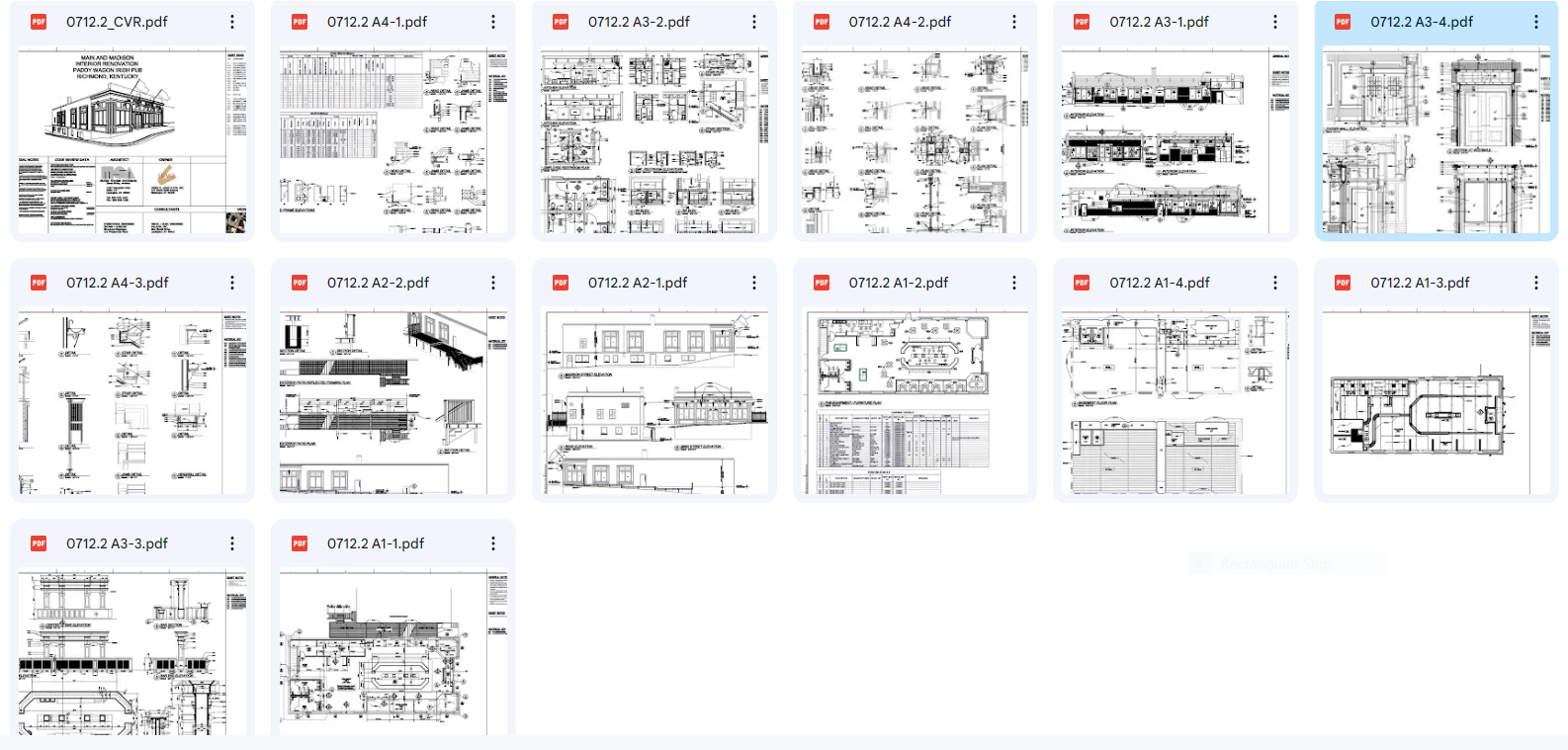
https://drive.google.com/drive/folders/1564qx1FAvD5mCFucBGtB5O_0IKQ5LJCw?usp=sharing McKay Snyder Architects, Jim McKay, Architect
Click the link above to view full size PDFs of each sheet.
I was doing that kind of modeling since 1998.
Here is a collection of projects I worked on from 2004-2008, modeling, rendering, and automating drawing.
By the way we did all the modeling back then in the modeling space. I learned, back then, that the set of automated drawings the model generated was my lens for looking at the model systematically and checking its adequacy.
Thinking more about this, It is certain that earlier generations for centuries understood this already, before computers and software. For them the model was the mental model and the drawings were the lens through which they looked at, developed, and clarified that model.
Together with what leading software developers say today, that “drawings are what the industry actually runs on”, all of this is understatement that veers close to missing the point.
The industry doesn’t run on drawings. The industry runs on clear, coherent, adequate, thought clearly conveyed.
Drawings are a vehicle for that.
But clear coherent thought about what? Not just anything.
Answered:


