From discussion here on Linkedin, https://www.linkedin.com/posts/oystein-ulvestad-b1602a79_xchange-sweco-armandorito-activity-7211156141492346881-Uh6g
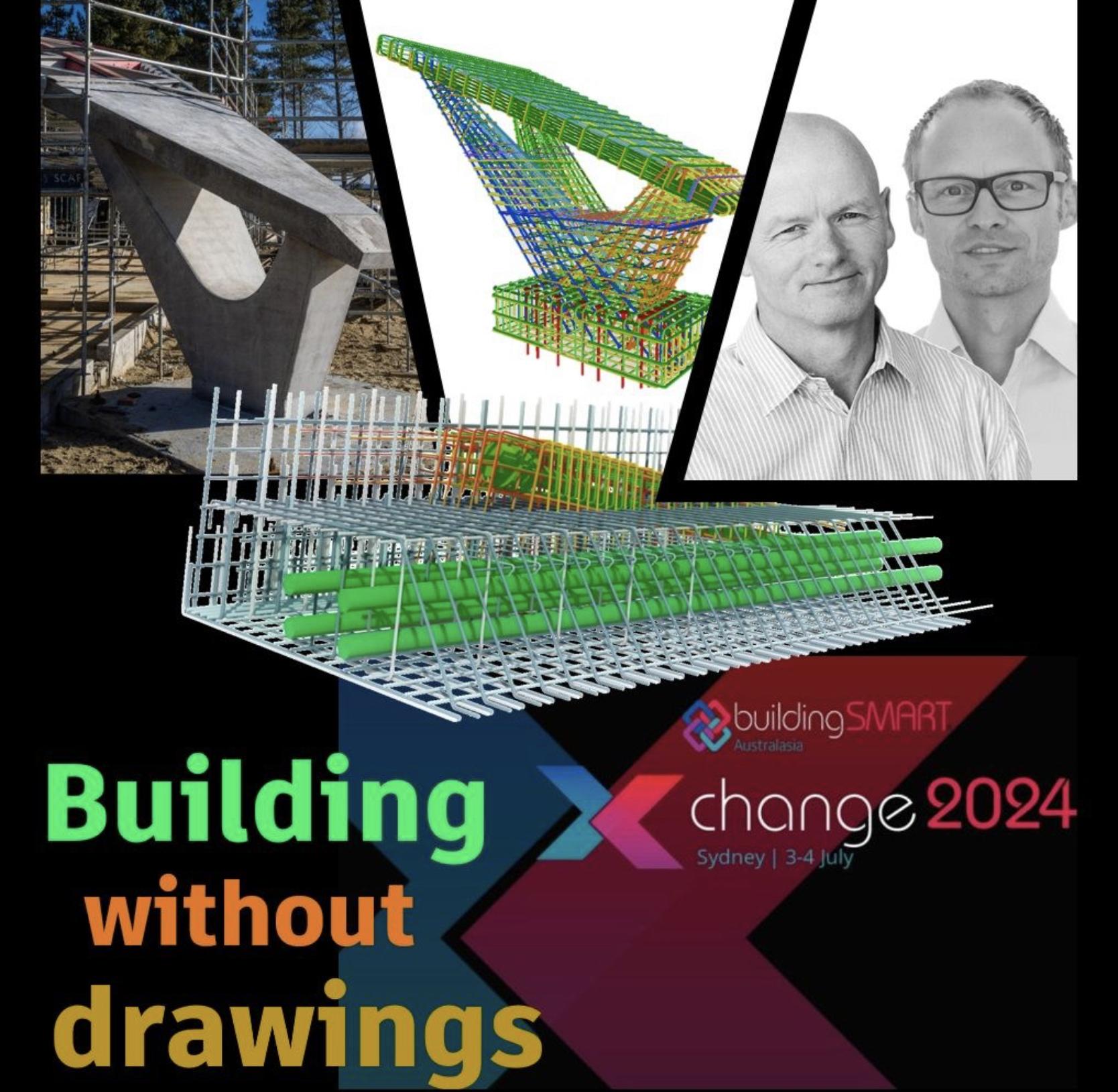

The reply I make is longer than the comments format allows so I continue here:
Oystein, you make some assertions there that appear to take the form of an argument.
To dig into that a bit, previously, a few weeks ago, you yourself (if I remember correctly, or it was someone else directly involved with these Norwegian projects, but in a thread on Linkedin in which you were present) acknowledged that
the word “drawingless” in reports about “drawingless projects in Norway” does not mean “without the use of drawings”, and without other things that are drawing-like (managed review and comment on saved views in the model).
Many comments discussing this are under your post from 4 weeks ago (May 2024) here: https://www.linkedin.com/posts/oystein-ulvestad-b1602a79_jointherevolution-digitalization-bim-ugcPost-7201084917894594560-XYXn

There are many other insightful comments of this nature under the post there. I recommend anyone reading this to review all of those.
That being the case, what is left of the assertion “huge money saver via drawingless”?
The “drawingless projects,” slogan about moving the industry further into “BIM” by moving it away from drawings, has been with us for over 20 years now, and all along the way without the qualification, above, that:
it’s not to be understood as “without drawings,” because it turns out that these projects DID/DO use drawings both in their traditional form, and in the form of other things that are functionally like drawings.
Nevertheless the slogan hangs around for so long because of an unfortunate combination of:
A. category error with regard to the functional purpose of models and drawings respectively [environments, and expressions of visual close study (VCS)].
B. an unfounded, illogical faith that abandoning one in favor of the other is in any way meaningdul and that it represents some kind of progress.
C. a willful ignorance of the function of drawing with regard to drawing’s interplay with models mental and digital. See four functional points here: https://tangerinefocus.com/why-do-we-need-better-vcs-equipment-the-pragmatic-answer/
- Any single technical drawing is an expression of the act of looking somewhere specific within a model mental or digital, the act of visual close study (VCS) there and the articulation of this close study.
- There at that location, we evaluate, is everything that SHOULD be shown THERE actually shown there? Is anything that matters THERE missing?
- Finally at some point after the long work of model development and review, someone with authority (experience, knowledge) to do so, AFFIRMS the status of the questions in (2).
- Along the way, an INTERPLAY is engaged, in our minds, between:
— a set of expressions of visual close study (VCS) at various locations of narrowed attentive visual focus within a model
and
— the wider expanse of the whole of the modeled project environment
The interplay is a back and forth continuous dynamic. There is good argument that this, the interplay, is the basic observable dynamic of thought itself, that the wide/narrow (environment/focus) interplay is the machine of thinking at work, the engine of thought.
The idea that one side of the interplay can either be discarded or stuck in a non-evolving centuries-old form of expression and externalized from the digital model is simply self-defeating and counterproductive, maximally.
I draw your attention to item 4 in particular and emphasize it. For 20+ years now of marketing and development of digital modeling software in AEC, VCS has been left largely undeveloped.
This undermines the modeling endeavor itself. The engine of thought itself is left underpowered.
All of this is true both for model authors (we require this interplay, the engine of thinking, WHILE AUTHORING the model.). Those using the model after it’s authored, downstream, also need the interplay, for interpretive purposes, for developing their understanding beyond superficial.
The slogan is the greatest single factor working against the modeling endeavor itself
The slogan is an own/auto-goal.
It’s also double-acting. The double action consists of 1 and 2 below:
(1.x) You LOSE, with the slogan and its accompanying beliefs, many of the most highly skilled serious people in the professions, many of those capable of thinking things all the way through with regard to a project and their team’s role in it. Typically such people have neither the time nor the patience for people persistently engaged in unfounded beliefs and counterproductive thought snippets that go nowhere and mean nothing.
(1.y) You GAIN a cargo cult following of true believers drawn from among those in categories other than (1.x) above. This includes decision makers in software development corporations too (and their investors, and marketers) who, by and large but with some few exceptions, know very little about the professions their products serve.
(2). Software development abandons VCS innovation and evolution for decades, the greatest impact of which is the inadvertent auto-undermining of the modeling endeavor itself. Ironic (yes, an actual case of apt use of the word irony) because the undermining of modeling, is the primary outcome of the attempt at promoting it (via A, B, and C above).
Try to imagine where we’d be today without that malformed attempt at model promotion we’ve endured for 20 years now.
(3.l) We’d have behind us 20 years of co-development of modeling software and VCS equipment integrated into the models.
Anyone interested in joining our open source project developing TGN VCS equipment for use in ALL modeling apps and platforms, message me.
(3.m) This would have significantly elevated both model utility and model usage.
(3.n) We’d have avoided us versus them adversity. No ‘drawing camp’ and no ‘modeling camp’ would have formed, and the energy wasted opposing each other would have been applied elsewhere productively
(3.o) We would not have LOST many of the most highly skilled professionals’ interest, attention, and use of digital models.
(3.p) We would not have GAINED a cargo cult and there’d have been no reason to cultivate one.
Let’s make the next 20 years more productive
I authored extremely complete and accurate BIM models since 1998. The idea of doing that without an adequate VCS lens (visual close study lens) is delusional. My VCS lens was a set of automated construction drawings. Here’s an example from 2007 (scroll down): https://tangerinefocus.com/2023/10/24/model-automation-and-model-quality-on-a-graph/
Today I’m building the future of that lens.
Repeating:
Anyone interested in joining our open source project developing TGN VCS equipment for use in ALL modeling apps and platforms, message me.
Here’s the TGN VCS proposal and specification:
I’ve done this kind of thing before:
https://tangerinefocus.com/tgn/earlier-media-innovations/ This was v1.0. It proliferated into nine different softwares.
TGN VCS is v2.0 and leapfrogs v1.0 in important ways.
I want to go back to the essential INTERPLAY, the continuous model<>VCS (wide<>narrow) (environment<>focus) interplay, the engine of thought: an example:
Other action I take right now is action on a garden shack. I’m designing one that I’ll build next year. I just started thinking about it.
As always it starts with some ‘notion’.
Then a quick sketch (model):

Now from here, more model development to be done. This requires thinking (thought is action). And that requires visual close study (VCS), which always involves the INTERPLAY I mentioned above:

At the moment, the VCS (drawing) is out in front of the digital model but it is fully in sync, via continuous interplay, with my MENTAL model, which is put in formation precisely by the continuous model<>VCS (wide<>narrow) (environment<>focus) interplay.

 OPEN VCS, a lens for looking at models