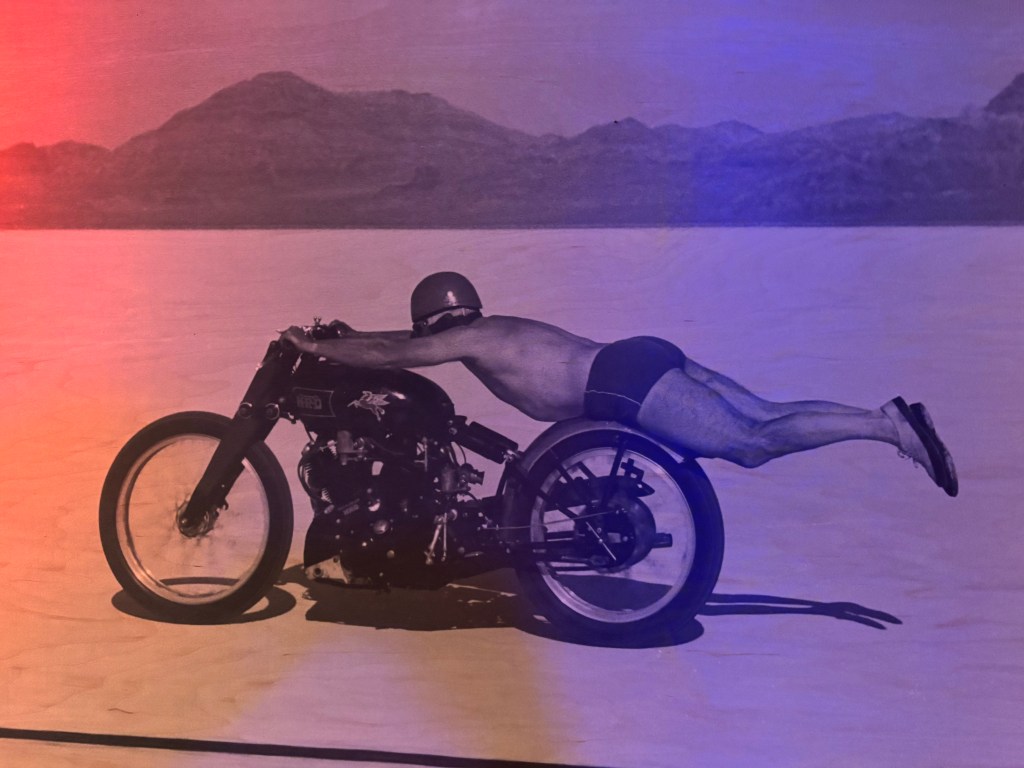
The CAD / BIM industry jumped down a rabbit hole around the turn of the century and hasn’t been seen above ground since. That wouldn’t be a problem but for the damage done to our understanding of the relation between drawings and models. Drawings are equipment for looking at models, for evaluating them.
It’s often forgotten in the rabbit hole that models predate digital modeling. and of course BIM. Functionally, models are the same whether they’re mental, physical, or digital. That’s more significant than you might realize at first; the primary functional aspect of models is held already by the mental model.
And as a matter of fact:
- No digital model (nor physical) has ever meant anything to anyone, without an adequate mental model in formation.
The BIM rabbit hole threw a monkeywrench into the previously well and widely understood relation connecting drawings and models:
- Drawing is the lens through which we look at (AEC) models mental, physical, and digital.
We look, for clear reasons, with specific intent.
I’ll come back to that.
But first, generally:
Hollywood decidedly does not arrange and assemble scenes, actors, and directors, declare “Action!” and let things unfold as they will, WITHOUT A CAMERA RECORDING IT.
Nor without intention in what to show, and why and how to show it.
Nor without a story.
And neither does it give a camera to everyone asking, or “letting them,” film whatever, randomly.
Hollywood is blessed with people who understand this, like this: Tom Cruise talks about cinematography, and so invests in scene development and the equipment, methods, and techniques for showing it.
In AEC software, we are not so blessed.
Yet.
We could be, and would be, if software would alter course and aim on target finally after nearly 5 decades.
After inexhaustible claims not to be the problem.
Software, the lady, doth protest too much.
Software -is- the problem.
There is of course AEC VIZ software and the important accomplishments made there. But those address a small fraction of AEC work. They displace the hand illustrator brought in for a thousand bucks to render a few mood shots. Digital Arch VIZ expanded the scope a bit but still basically operates in that niche. Here’s some of my viz work from long ago. People who want a tech-centric career in AEC should go there, or once did; the jobs are evaporating now evidently. But in AEC tech it’s about the best one can hope for (unless things finally change). At least the tech is adequate. In any case there is a lot that can be salvaged from it.
Not so in BIM or CAD.
Those are dead.
The technology is stagnant and wholly inadequate.
But people are trained, and inclined, not to notice.
The training works because a large number of people are in a rabbit hole and mesmerized down there.
At this point it looks like they’re not coming out.
They say things like, and have said for more than 20 years now:
- Drawings are archaic; models are the future; we need to finally abandon drawings.
They believe models replace drawings, which is like saying:
- The cosmos replaces telescopes.
Countering that, one argues against utter nonsense and its entrenched believers, a joyless task but somebody has to do it and endure the consequences.
Sight of the cosmos in the night sky should not provoke argument advocating for the demolition of the world’s telescopes. And, it must be said, neither should the night sky provoke the idea (nor even simple cognitive fog/lock/stasis) that the telescope must remain forever locked in its current form and performative status.
This should be obvious you see, but in AEC it’s not.
In astronomy the night sky provokes the search for ever-better equipment for looking at it, ever-improving telescopes.
As drawing is scoped for this, as it is the vehicle for…; as it is the lens for looking at models with intent tuned specifically to AEC’s core work. . . , arguing to dispose of it is the equivalent of tech leaders in Hollywood who would (they wouldn’t) say:
Hollywood doesn’t suffer from its tech leaders falling into a rabbit hole and digging out an abode down there to inhabit for decades. Tech for film isn’t hatched by people dwelling in a dreamy apartment (literally) where all is fantasy and the connection between tech and the actual core, non-optional, essential work of the industry, is severed.
What is the core work of AEC?
That is answerable.
And rather, the answer is found by studying the relation between drawing and modeling; drawing after all is an instrument, is -the- instrument, for the close study OF MODELS, and for their evaluation:
- Drawing is a lens for looking, the vehicle for looking with intent — at models mental, physical, and digital — and showing that you did.
That summarizes it, and of course there is more to say.
See the description of the core work of AEC below, in the cyan text on black background:
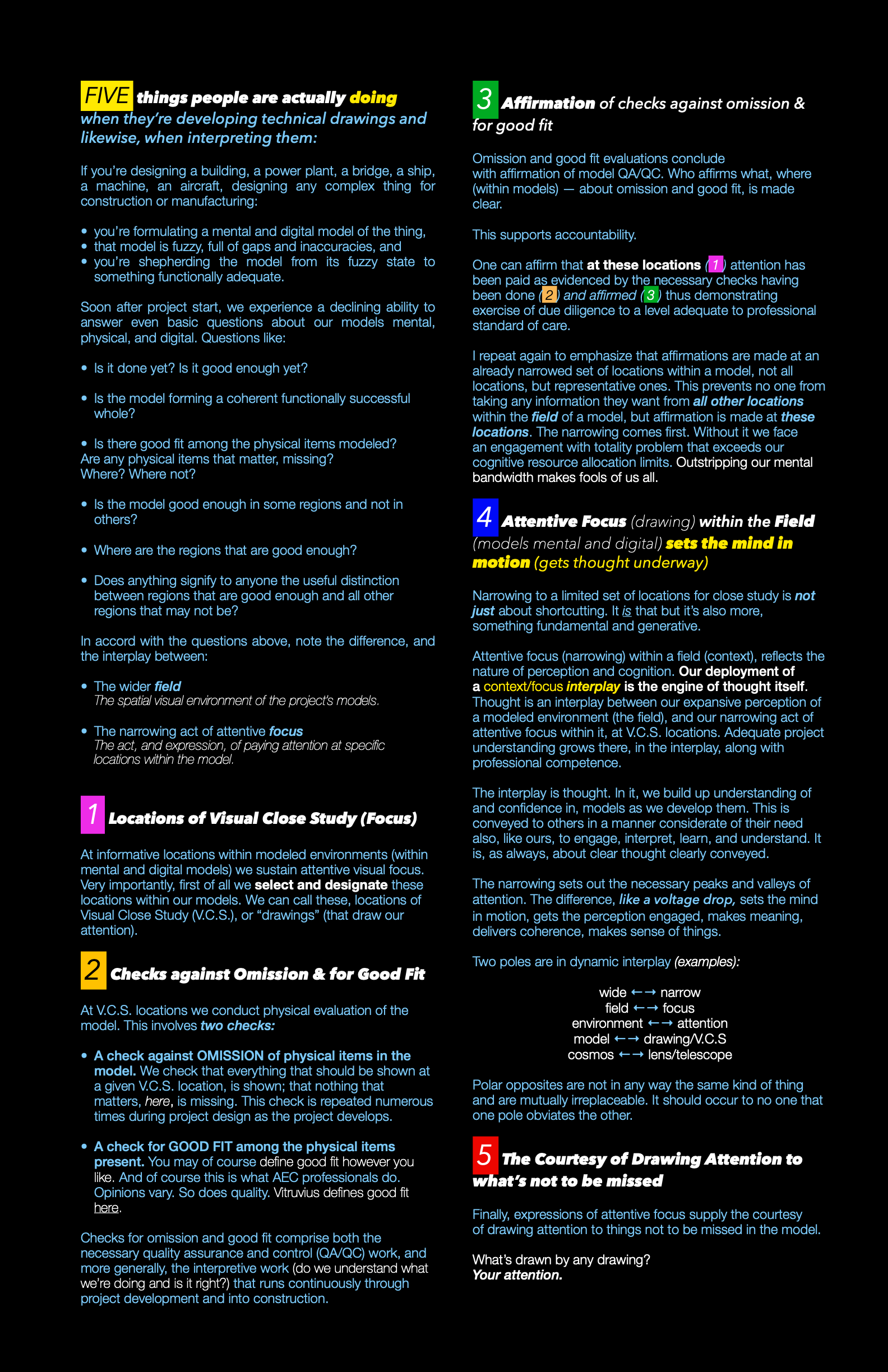
Looking with intent, and showing that you did
What are people looking at, and for, when looking at AEC models?
Specifically, what is their intent when looking?
And why do they invest the majority of their resources doing so?
Little is written about this.
Not in AEC tech these days.
They’ve piped down.
Mercifully the question is largely just ignored.
Otherwise the tone and approach to drawing for decades has been to waive it away dismissively:
- “Drawings are just dumb lines and arcs”
Or they pander to it, treating it as a delightful artifact of a sadly bygone era, they say (false empathy), implying that drawing is something to be appreciated by sophisticates inhabiting a more advanced time attending a museum gallery.
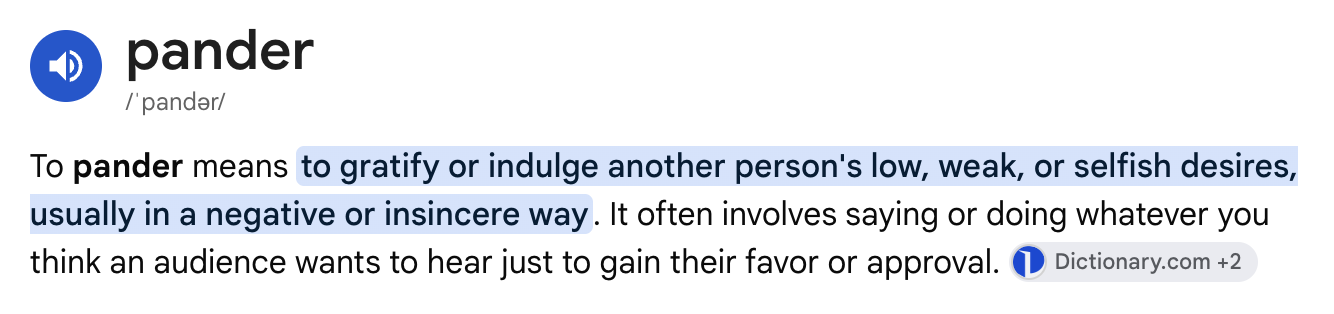
The “dumb lines and arcs” meme was popular around 2010.
It’s a strong contender for the least adequate definition presented, of anything, ever.
Such ideas were forced into retreat though.
AEC tech companies and their apologetics and apologists grudgingly endure drawing production’s refusal to go away while they continue to deliver – and charge a great deal of money for – software for drawing production.
While the previous attempts at dismissal are swept under the rug, the memes are kept in reserve by thought leaders biding their time, while still “strategizing” about:
- total modeling
- all-encompassing “data”
- generational shifts
- and advances in computation and “AI”
A kind of “data-messiah” will come.
And when it does, their idea – of kicking drawing along with astronomer’s telescopes and film-makers’ cameras, I guess, down the back stair – will be proven correct after all, finally delivering their vindication.
In the rabbit hole, connections to methods of human understanding, perception, and thought itself, connections in play in AEC, are cut.
They’ve done a lazy substitution.
They swapped in:
- wishful and magical thinking, a void of non-thought, and labeled it “forward-looking thought leadership”.
The price, what they swapped out in exchange, is:
- actual thought, thoughtful actual engagement with complexity, with the complexity of AEC models and the necessary equipment for engaging that complexity in productive ways that move work forward toward real goals.
This swap is not smart.
The exchange price is robbery.
The spell has to be broken.
Gently or harshly.
Sooner rather than later.
Beliefs in very strange ideas degrade performance.
They’re counterproductive to AEC, the industry, and counterproductive to the software industry serving it (unless eating AEC is the productive goal of AEC software).
The mesmerized can be led out of the rabbit hole.
I believe they can. I could be wrong.
They can bring their data dreams with them on the way out and model to their heart’s content.
But what MUST happen is this:
Model utilization must rise in quality
The digital model must be (as the mental model is) the environment in which the act of looking with intent is expressed and realized.
This means, I repeat it because it is worth repeating:
- The model must act as host for the core work of AEC and its professions: looking at and evaluating models as they develop.
- Underutilization of models must be solved by software that increases model utility.
- Software must re-orient itself to support use of models for what they’re best suited:
- being the environment within which architects, engineers, and builders visualize.
- Specifically, the model must be the place where AEC professionals activate and express that particular kind of looking that not only just happens to be the AEC industry’s most heavily invested form of (though it is usually not thought of as such) VISUALIZATION: the set of drawings embodying the act of looking with specific intent at models.
- And, by the way, the form of this equipment for looking will evolve, when that happens.
The mesmerized will rub their eyes in bewilderment of daylight.
The rest will breathe in relief unchained from madness.
Everyone can get back to focusing either on core tasks, or meaningful value add.
Anything else can just end up in a dossier of a decades long insanity.